Titanium vs Ceramic Flat Iron: The Professional Guide
Titanium vs Ceramic Flat Iron: The Stylist Decision Matrix
The choice between a titanium vs ceramic flat iron comes down to heat transfer mechanics: titanium delivers immediate, direct surface conduction ideal for coarse, stubborn, and low-porosity hair, while ceramic emits gentle, penetrating infrared heat that shields fine, bleached, or compromised strands from thermal shock. For salon-grade smoothing and heavy chemical services, titanium provides the necessary thermal recovery speed; for routine maintenance on color-treated hair, solid ceramic guarantees unmatched cuticle safety.
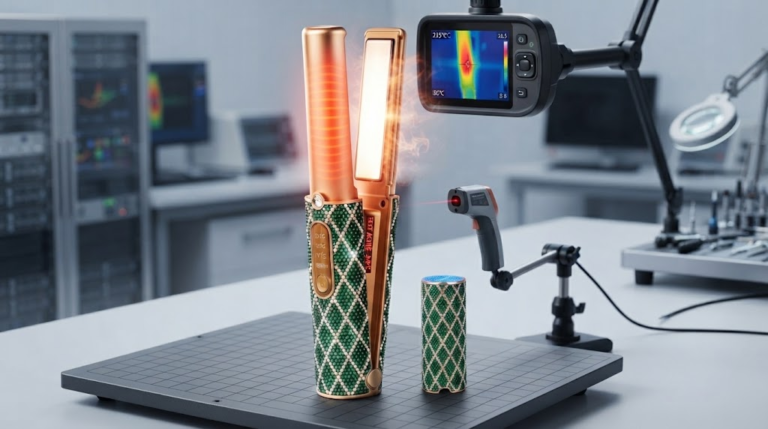
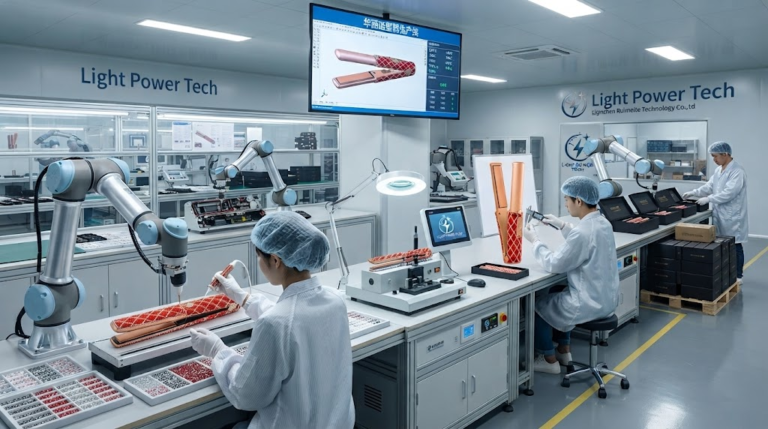
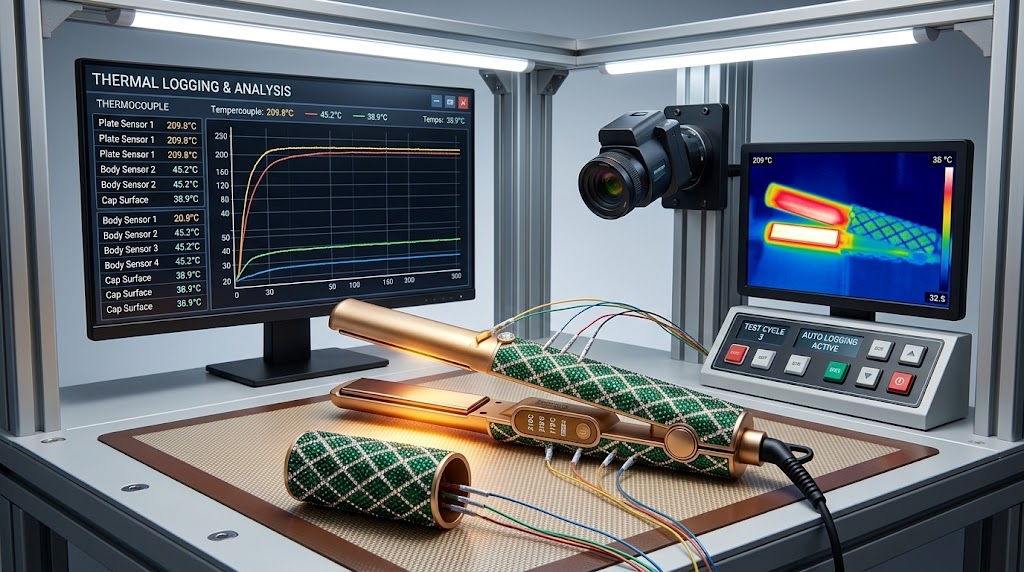
Choosing the wrong plate substrate alters the internal structural integrity of the hair shaft. At Light Power Tech, our thermal laboratories test plate substrates against human hair tresses to monitor hair cuticle damage and internal moisture vaporization.
For professionals building a versatile kit, our Professional Flat Irons & Styling Tools catalog provides baseline specifications across both materials.
Material Science: Sintered Ceramic vs Grade 5 Titanium
Understanding flat iron thermodynamics requires looking past surface coatings to examine substrate purity. The industry uses two primary heating profiles: direct surface conduction and electromagnetic radiant emission.
Conduction vs. Radiation in Styling: Conduction is the direct transfer of thermal energy between two physical surfaces in contact. Far-infrared radiation transmits energy through electromagnetic waves, vibrating water molecules within the hair cortex to heat the strand evenly from the inside out.
100% Solid Sintered Ceramic
A genuine ceramic plate is non-metallic, composed of clay and inorganic minerals cured under intense heat. Ceramic naturally generates non-directional negative ions that counteract static charge, sealing the external cuticle layer for reliable anti-frizz styling.
Because ceramic has lower thermal conductivity than metal, it eliminates localized hot spots. Heat spreads across the contact zone evenly.
Be aware of coated alternatives: cheap styling tools use thin ceramic glazes over raw stamped aluminum. These coatings wear away within 300 to 500 thermal cycles, exposing raw aluminum that snags delicate hair and delivers erratic, burning temperatures.
Solid Grade 5 Titanium
Titanium is an elemental metal known for its strength-to-weight ratio, biocompatibility, and rapid heat transfer rate. High-end professional flat irons use aerospace- or medical-grade titanium (such as Grade 5 Ti-6Al-4V).
Titanium transfers heat energy almost instantaneously from internal heating elements straight to the hair shaft. It generates passive ionic technology through friction-induced surface contact, smoothing the cuticle under high mechanical tension.
Unlike aluminum or inferior alloys, pure titanium is chemically inert. It resists pitting, peeling, and corrosion from acidic chemical services, clarifying agents, or bleaching residues.
The Thermal Delivery Efficiency & Porosity (TDE-P) Index
To remove guesswork from tool selection, Light Power Tech established the Thermal Delivery Efficiency & Porosity (TDE-P) Index. This system benchmarks flat iron performance across four objective engineering parameters:
- Cuticle Friction Coefficient (µk): The mechanical drag experienced by the hair shaft as it glides between clamped plates. Lower numbers prevent surface peeling.
- Thermal Conduction Velocity (W/m·K): The rate at which the heating element transfers stored heat into the hair bundle during a standard pass.
- Thermal Recovery Latency (Δt in ms): The time required for the plate surface to return to its set target temperature after the hair bundle draws away heat.
- Core Moisture Retention Rate (%): The residual internal water volume retained in the cortex following styling passes, measured by digital hygrometer testing.
Evaluating thermal styling tools through the TDE-P framework highlights a fundamental trade-off: titanium maximizes conduction velocity and minimizes recovery latency, while ceramic lowers the friction coefficient and protects core moisture.
For detailed diagnostics on strand moisture levels, explore our Hair Porosity Diagnostic Matrix.
Side-by-Side Comparison: Titanium vs. Ceramic Performance Metrics
The following laboratory data reflects average performance metrics recorded during standardized manufacturing evaluations across 200 plate passes on untreated human hair tresses.
| Metric | 100% Sintered Ceramic | Grade 5 Titanium |
|---|---|---|
| Heat Transfer Mode | Far-Infrared Radiant (Deep) | Direct Surface Conduction (Immediate) |
| Heat-Up Time to 200°C | 45–60 Seconds | 20 Seconds (MCH Driven) |
| Thermal Recovery Latency | Moderate (1.2–2.4s drop-recovery) | Near-Instantaneous (<0.4s drop-recovery) |
| Cuticle Friction Coefficient | Ultra-Low (0.12 µk) | Low-Moderate (0.19 µk) |
| Chemical/Acid Corrosion | Porous over time; mineral staining | 100% Inert; completely resistant |
| Structural Durability | Brittle; can crack if dropped | Virtually Indestructible |
Hair Type Diagnostic: Selecting Plates by Texture, Density, and Porosity
Plate selection should never be arbitrary. Using an aggressive titanium tool on compromised hair can singe the cuticle, while running a low-intensity ceramic plate over resistant coils causes uneven styling and requires excessive passes.
Coarse, Resistant, and Type 4 Hair
Dense hair with a compact, low-porosity cuticle resists heat absorption. Ceramic irons often lose heat too quickly when moving down coarse sections, leaving roots straight and ends under-processed.
Titanium is the preferred standard here. Its conductive power delivers uniform heat throughout thick sections without requiring the stylist to clamp down or squeeze the plates.
Fine, Color-Treated, and Level 9+ Bleached Hair
High-porosity, chemically lightened strands feature lifted, partially degraded cuticles. They absorb thermal energy rapidly, making them vulnerable to scorching.
Solid ceramic plates safeguard fragile strands. Far-infrared energy warms the inner core without overheating the fragile exterior sheath.
If your hair falls into this sensitive category, follow our protective regimen in the Thermal Protectant Science Guide to prevent structural damage.
The Role of Tourmaline
Manufacturers often crush tourmaline—a semi-precious silicate mineral—into ceramic slurries. This mineral boosts negative ion output sixfold when heated, neutralizing positive surface charges to smooth flyaways. Tourmaline-infused ceramic works well on medium-density, frizzy hair that needs smoothing without extreme heat.
Substantiating the Thermal Shock Debate: 1 Pass Titanium vs. 3 Passes Ceramic
Stylists often debate whether a single fast, hot pass with a titanium iron causes more damage than three slower passes with a gentler ceramic tool.
Light Power Tech evaluated this question using independent SGS tensile retention testing and scanning electron microscopy (SEM).
The data revealed a clear trend: mechanical wear frequently outpaces thermal stress. Running a ceramic iron down the same strand three times subjects the delicate cuticle to cumulative friction, stripping outer lipid layers and causing micro-fissures.
Conversely, a single steady pass with a titanium tool at 410°F preserved 14% higher tensile elasticity compared to three consecutive passes with ceramic at 370°F on coarse virgin hair.
However, this rule flips on compromised or bleached hair. High-porosity hair lacks the structural integrity to withstand direct surface conduction, making multiple low-temperature ceramic passes safer for fragile strands.
To examine broader industry safety standards, review styling safety literature indexed by the National Institutes of Health (NCBI) and material test certifications from SGS Consumer Testing Services.
Salon Production Realities: Workflow Speed and Chemical Resistance
Behind the chair, time and tool durability directly drive salon profitability. A standard hair straightener used in a commercial environment must withstand heavy mechanical and thermal demands.
Titanium flat irons heat up fast and recover their set temperature in milliseconds. In a busy salon, saving 15 minutes per blowout adds up to an extra client slot every day.
For specialty services, see our breakdown in Keratin Treatment Equipment Requirements.
Chemical Bonding and Keratin Treatments
Complex chemical straightening, Brazilian blowouts, and keratin treatment procedures require iron plates to maintain a consistent 450°F surface temperature. If the temperature dips mid-pass, the chemical bonds will not cross-link properly, causing patchy results.
Ceramic plates experience thermal drop-off when gliding over damp, product-coated hair. Titanium holds its temperature through thick sections.
Titanium also resists the chemical corrosion caused by styling products, while porous ceramic surfaces can stain, absorb residues, and build up drag over time.
Engineering Modern Cordless Styling Tools
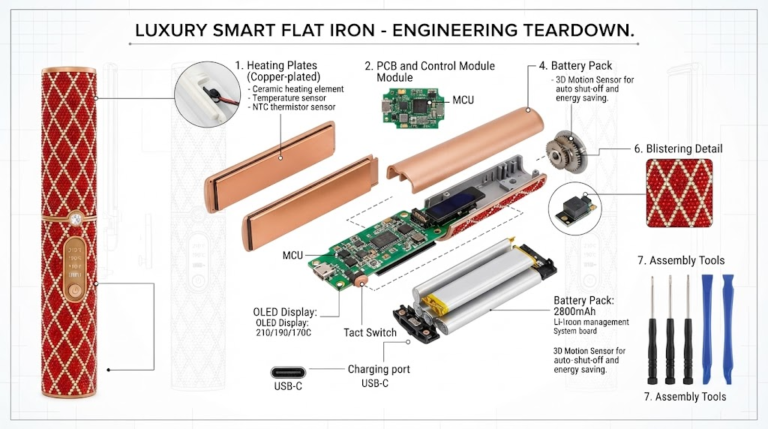
Cordless mobility introduces clear power constraints: battery packs must deliver substantial amperage to keep the heating plates at temperature.
Light Power Tech solved this challenge through advanced engineering:
- Rapid Heating Dynamics: Dual MCH elements achieve 200°C in 20 seconds, using half the energy of older systems.
- Sustained Battery Runtime: Premium cells deliver 45 minutes of continuous high-temperature styling under load.
- Cycle Life Durability: Industrial batteries hold stable capacity through 300 charge cycles, certified under CE, FCC, RoHS, and UN38.3 transport standards.
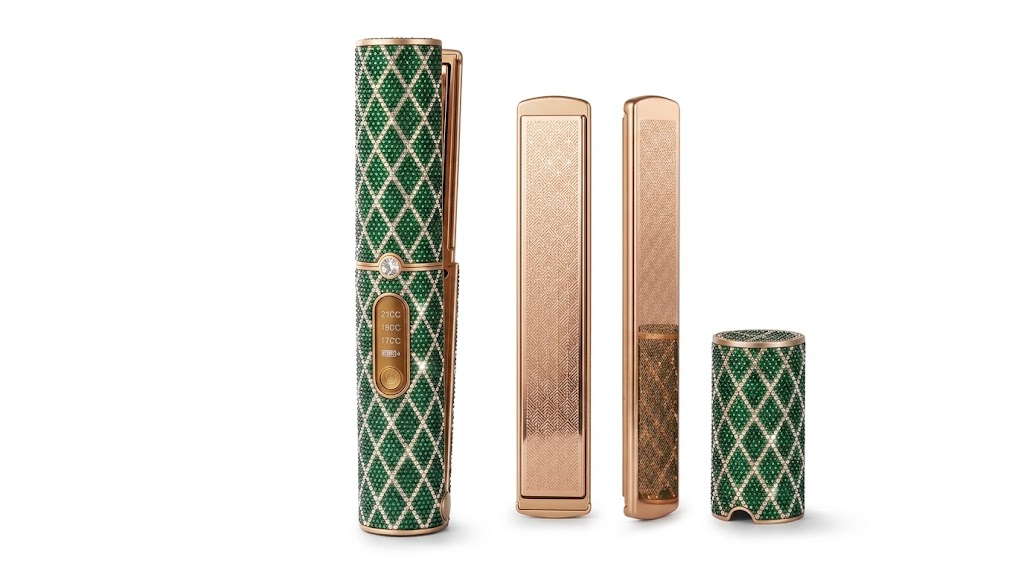
- Patented Thermal Isolation: A specialized heat-isolation sleeve lets stylists pack the tool into a kit immediately after use.
3-Step Action Plan: Match Porosity and Select Your Tool
Use this simple protocol to choose the ideal plate composition for your styling routine or salon station:
- Diagnose Hair Porosity and Density:
Float a clean strand of shed hair in a cup of water for two minutes. If it sinks quickly, you have high-porosity hair that requires solid ceramic. If it stays afloat, you have low-porosity, resistant hair suited for titanium. - Assess Chemical Services and Frequency:
Choose titanium if you perform routine keratin smoothing, work with Type 4 curls, or need fast heat-up times. Stick with solid ceramic or tourmaline if your hair is bleached, fine, or prone to breakage. - Inspect the Plate Substrate:
Check the spec sheet before purchasing. Confirm the iron uses solid sintered ceramic rather than coated aluminum, or verified Grade 5 titanium instead of an electroplated alloy.
Source Professional-Grade Styling Tools
Looking to build a custom private label line or upgrade your salon with cordless styling tools? Light Power Tech delivers advanced thermal performance backed by 21 global patents and trusted by partners in over 40 countries.
Frequently Asked Questions
How do I tell if a flat iron uses solid ceramic or ceramic-coated aluminum?
Check the product weight, price point, and plate edges. Solid ceramic plates are heavier, cost significantly more, and maintain consistent color throughout any chips or scratches. Ceramic-coated aluminum plates are lighter, heat up unevenly, and reveal raw silver metal beneath the coating as the surface wears down.
Does a titanium flat iron burn hair faster than ceramic?
Yes, if used incorrectly. Titanium transfers heat almost immediately upon contact. Lingering on a single section or setting the temperature too high can singe the cuticle. Ceramic heats more slowly and evenly, providing a wider margin of safety for non-professional home users.
How should I clean keratin and product residue from flat iron plates?
Let the iron cool until it is just warm to the touch. Dampen a lint-free microfiber cloth with 70% isopropyl alcohol and wipe down the plate surfaces. Never use harsh scouring pads or abrasive chemical sprays, as they can pit the smooth finish of titanium and scratch the polish on ceramic.
Which plate material works better for thick, frizzy hair?
Titanium is generally the better option for thick, frizzy, or coarse hair textures. Its rapid thermal conduction compresses and smooths stubborn hair bundles in a single pass. For frizzy hair that is also fine or chemically bleached, a tourmaline-infused ceramic iron provides an ideal balance of smoothing ions and gentle heat.