White Label Hair Straighteners: Complete Sourcing Guide
What Are White Label Hair Straighteners?
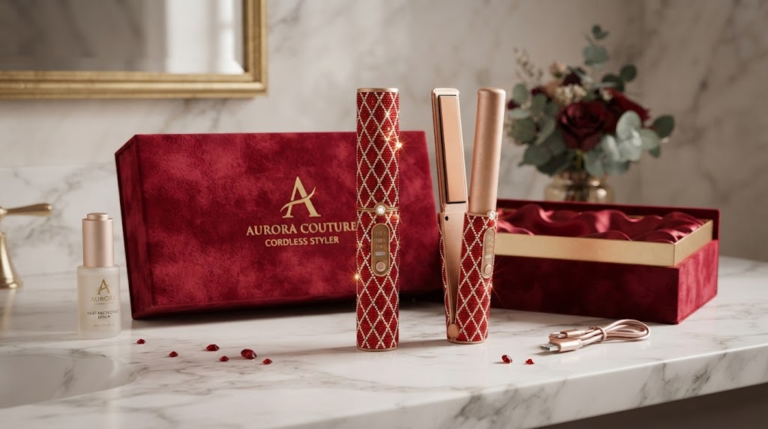
White label hair straighteners are factory-engineered styling tools manufactured by a specialized facility and customized with a salon’s or brand’s logo, colors, and bespoke packaging. Instead of spending tens of thousands of dollars developing custom injection molds, salon owners select proven, pre-certified chassis and take them directly to market under their own brand name.
Private Labeling in thermal hair tools refers to licensing an existing, certified electrical tool design from an established manufacturer, applying custom brand aesthetics, and distributing the hardware under a proprietary salon label.
When sourcing hardware, you will encounter two primary production models: Original Equipment Manufacturer (OEM) and Original Design Manufacturer (ODM).
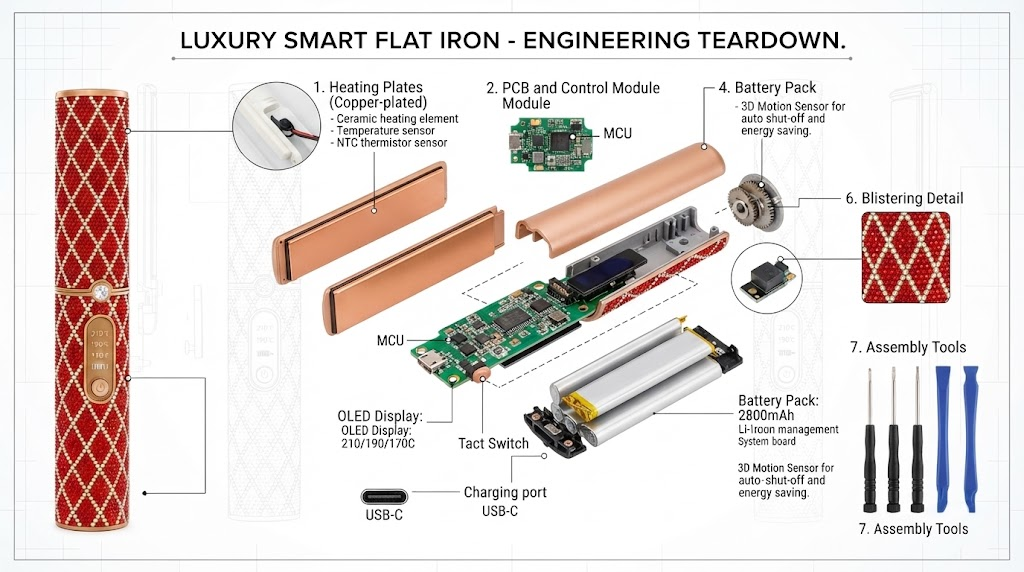
With an ODM workflow, you select an existing, fully engineered flat iron design from the factory catalog. You then customize the exterior shell color, surface finish, plate coating, and packaging. This is the fastest, most cost-effective entry point for salon owners.
With an OEM arrangement, you provide custom technical drawings, shell profiles, or unique heating configurations. The factory builds tooling molds exclusively for your brand. This pathway demands higher upfront capital and extended lead times, but provides absolute product exclusivity.
To explore hardware customizations for your brand, review our complete guide to Private Label Hair Tools.
The Business Case: Profit Margins and Salon Brand Loyalty
Most salon owners stock retail shelves with mainstream, mass-market styling brands. This traditional retail model introduces two major commercial problems: razor-thin margins and client showrooming.
When selling household-name appliances, salons purchase tools at wholesale discounts of 20% to 30% off MSRP. After paying credit card transaction fees and staff sales commissions, net profit per unit drops below $15.
Worse, clients frequently photograph the box on your shelf and purchase the identical model online from big-box retailers or discount marketplaces before leaving your waiting area.
Transitioning to custom branded private label styling tools resolves both issues simultaneously:
- Captured Lifetime Value: Clients cannot price-match your proprietary hardware on Amazon or discount beauty portals.
- Direct Margin Expansion: Sourcing high-grade flat irons directly from verified manufacturing facilities yields gross margins of 65% to 75%.
- Brand Retention: Every morning your client styles their hair, your salon’s brand sits directly in their hands, reinforcing appointment loyalty.
To optimize display placement and commission structures across your stations, consult our comprehensive Salon Retail Strategy.
Proprietary Data: Unit Cost vs. Profit Margin Breakdown
Based on production runs across our client network, manufacturing costs fluctuate significantly depending on order volume, heating core configuration, and shell coating technologies. The table below illustrates real-world unit economics for a luxury salon retail flat iron retailing at $160 MSRP.
| Order Tier (Units) | Ex-Factory Unit Cost | Custom Packaging & Print | Landed Freight (DDP) | Total Unit Cost | Gross Profit / Unit | Gross Margin % |
|---|---|---|---|---|---|---|
| 500 (Pilot) | $24.50 | $3.80 | $5.20 | $33.50 | $126.50 | 79.0% |
| 1,000 (Standard) | $21.00 | $2.40 | $4.10 | $27.50 | $132.50 | 82.8% |
| 5,000 (Scale) | $16.80 | $1.50 | $3.20 | $21.50 | $138.50 | 86.5% |
Even when incorporating custom magnetic gift boxes and air-express freight, single-location salons ordering a pilot batch of 500 units capture over 4x higher hair tool manufacturing margins compared to traditional commercial wholesale distribution.
Plate Metallurgy Comparison: Titanium vs. Ceramic vs. Tourmaline
The heating surface directly dictates thermal conduction, friction coefficients, and styling versatility. When specifying hardware for your brand, choosing between titanium vs ceramic plates determines which hair textures your tool serves best.
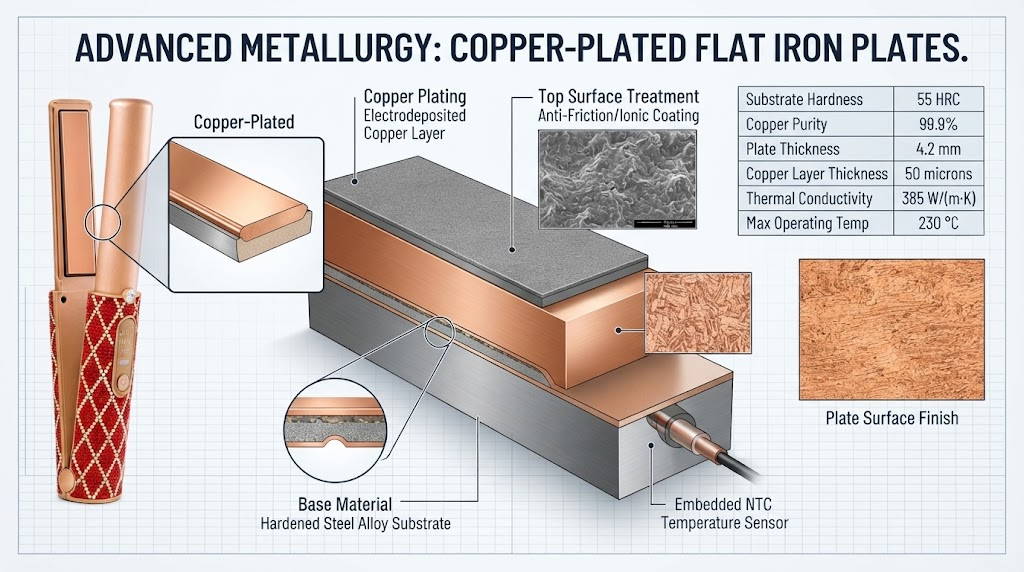
Pure Ceramic & Ceramic Coatings: Solid ceramic plates provide even heat transfer without focal hot spots. They emit far-infrared energy that penetrates the hair cortex gently, making them ideal for fine, chemically treated, or bleached hair. However, solid ceramic plates are brittle and can shatter if dropped on salon tile.
Electroplated Titanium: Titanium is an exceptionally lightweight metal with superior thermal conductivity. It transfers heat to coarse, thick, and resistant hair textures almost instantly. Titanium plates resist chemical corrosion from keratin treatments, making them the standard for chemical smoothing services.
Ceramic Tourmaline Technology: Tourmaline is a semi-precious mineral crushed into an ultra-fine powder and infused into ceramic slurry. When heated, it produces up to 600% more negative ions than standard ceramic, sealing the cuticle layer to eliminate static and frizz during Ionic Heat Styling.
Heating Core Technologies: PTC vs. MCH Heaters
Behind the styling plates sits the engine of the appliance. Low-cost consumer irons utilize Positive Temperature Coefficient (PTC) stones. PTC heating elements suffer from severe thermal latency: as the cold hair strand passes over the plate, the temperature drops by 20°C to 30°C and requires 15–20 seconds to recover.
Professional tools require Metal Ceramic Heaters (MCH). MCH elements feature ceramic-encapsulated heating tracks that reach 200°C in under 20 seconds. They provide real-time thermal compensation, regaining full operating temperature in under 3 seconds between passes to ensure consistent, one-pass straightening.
The 4-Stage S.T.E.P. Sourcing Framework for Hair Appliances
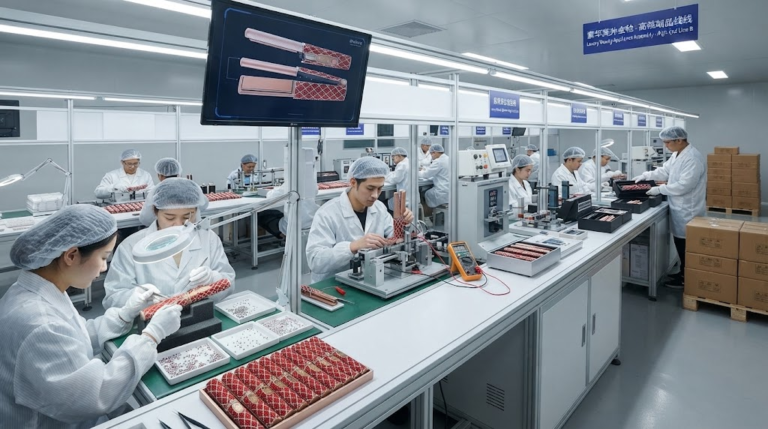
To prevent defective shipments, return headaches, and brand reputation damage, we developed The S.T.E.P. Sourcing Framework. This systematic methodology verifies that every production run meets professional commercial standards before final balance payments leave your bank account.
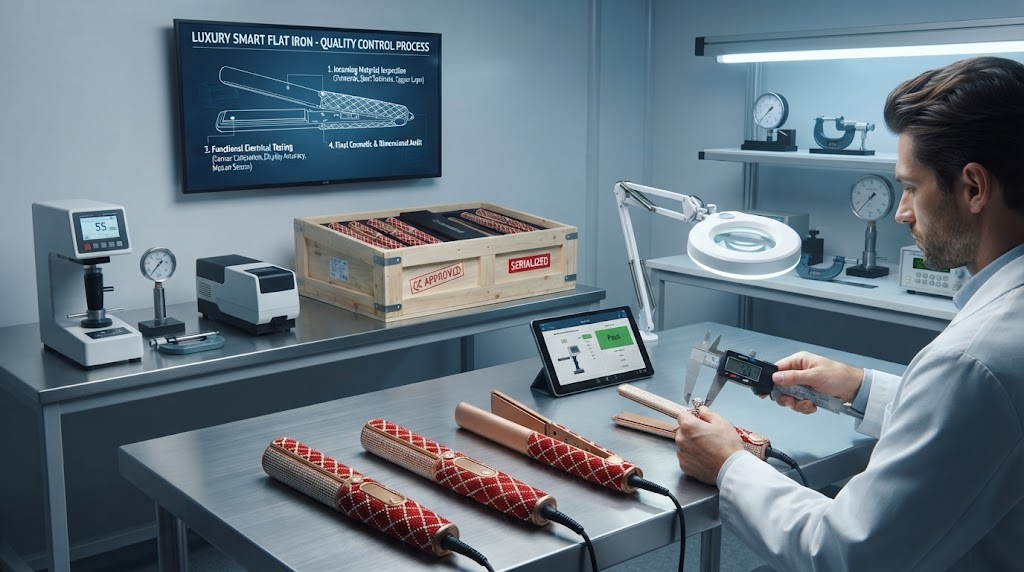
- Stage 1: Specification (S)
Lock in engineering tolerances before sampling. Specify dual-voltage (100–240V), digital micro-controllers (MCU), auto-shutoff thresholds (typically 60 minutes), and high-grade 2.7-meter 360-degree swivel cords with rubberized strain relief. - Stage 2: Testing & Teardown (T)
Conduct destructive physical and electrical teardowns on pre-production samples. Measure PCB solder quality, internal wire gauges, and flame-retardant casing ratings (UL 94 V-0). - Stage 3: Electrical Verification (E)
Audit factory certification test reports directly through accredited certification databases (such as Intertek ETL or TÜV Rheinland). Confirm high-voltage surge protection and dielectrical breakdown safety. - Stage 4: Packaging & Logistics (P)
Execute ISTA 1A transit vibration and carton drop testing to confirm packaging protects the internal ceramic heating elements throughout sea freight, customs handling, and final parcel delivery.
Factory Teardowns and Sample Stress-Testing Protocols
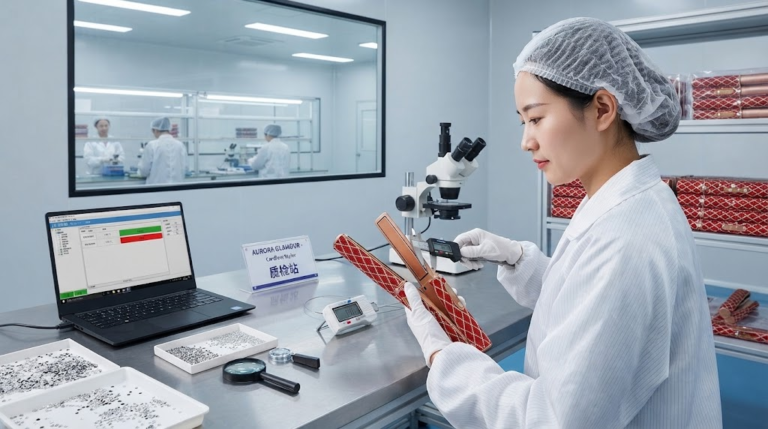
Never approve a mass production run based solely on cosmetic aesthetics. In our laboratory stress testing, we subject sample straighteners to rigorous physical abuse to simulate two years of daily salon wear:
- 1.5-Meter Hard-Drop Test: The tool is dropped six consecutive times from a height of 1.5 meters onto a reinforced concrete slab across multiple impact angles. The heating elements, floating plate suspension springs, and digital display must remain fully functional.
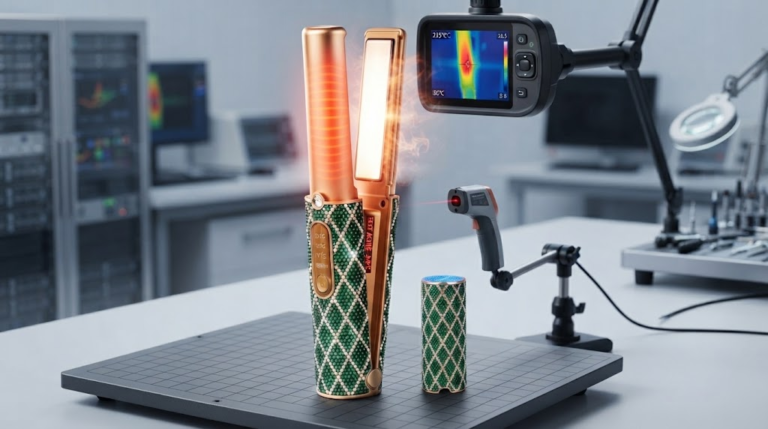
- Thermal Imaging Curve Analysis: Using calibrated FLIR thermal cameras, engineers map the surface of the heating plates. High-quality tools show no more than a ±2.5°C temperature variance across the entire active plate surface.
- Cord-Swivel 360° Fatigue Test: The power cord swivel joint is weighted with 250 grams and rotated through 20,000 continuous cycles to ensure internal conductors do not fray or short-circuit.
- Hinge Spring Fatigue Test: Automated mechanical arms open and compress the flat iron arms 50,000 times to verify spring tension integrity.
Electrical Safety and Global Regulatory Compliance
Selling electrical appliances exposes your salon to strict legal standards. If an uncertified straightener causes an electrical fire or short circuits in a client’s home, your business can face direct legal action if your manufacturer lacks valid test reports.
For distribution in North America, tools must be certified to UL 859 (Standard for Household Electric Personal Grooming Appliances) or CSA C22.2 No. 36, verified by Nationally Recognized Testing Laboratories (NRTL) carrying the ETL or UL mark. You must also secure FCC Part 15 Class B compliance to prevent electromagnetic interference.
For European and UK markets, tools require CE markings, compliance with the Low Voltage Directive (LVD), Electromagnetic Compatibility (EMC), and RoHS (Restriction of Hazardous Substances) verification. Secure comprehensive commercial Product Liability Insurance before retailing electrical hardware under your brand.
For an in-depth regulatory breakdown, download our Electrical Safety Compliance Guide.
Customization Scope: Logos, Hardware, and Luxury Unboxing
Professional private labeling goes well beyond basic pad-printed logos on a generic black plastic case. High-margin salon brands leverage tailored customization across three key touchpoints:
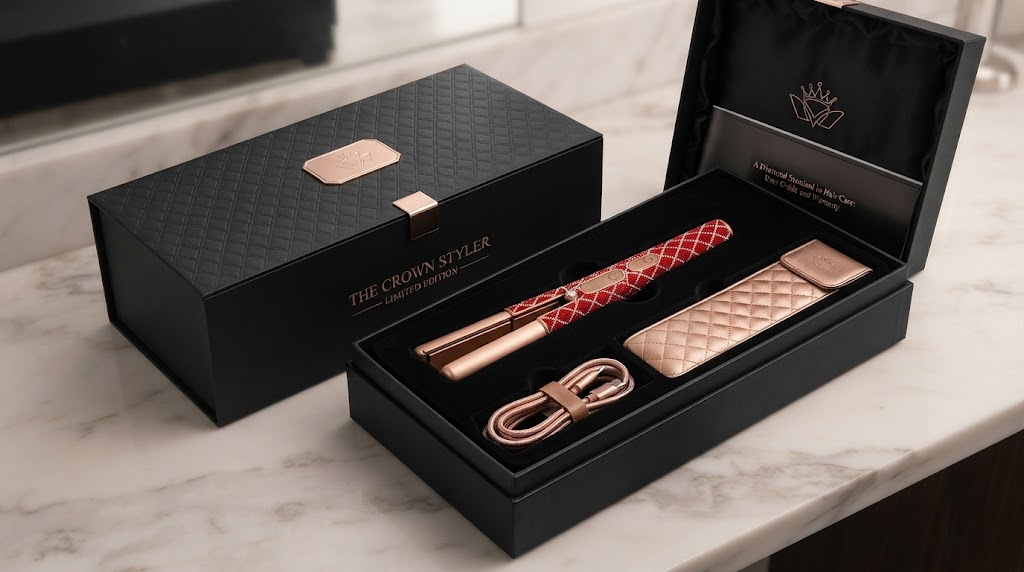
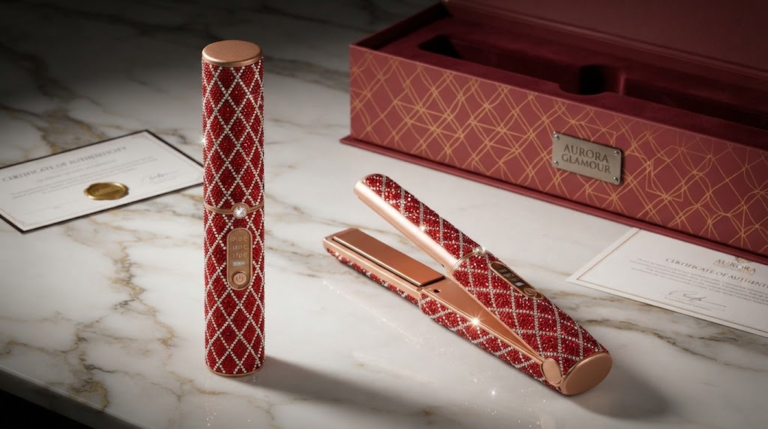
- Hardware Finish: Select from soft-touch matte rubberized coatings, metallic electroplating, high-gloss pearlized coatings, or heat-resistant metallic anodization.
- Branding Applications: High-precision fiber laser engraving provides a permanent, wear-resistant mark that will not rub off from hot salon oils. Backlit LED logos integrated beneath semi-translucent casings create a distinctive modern look.
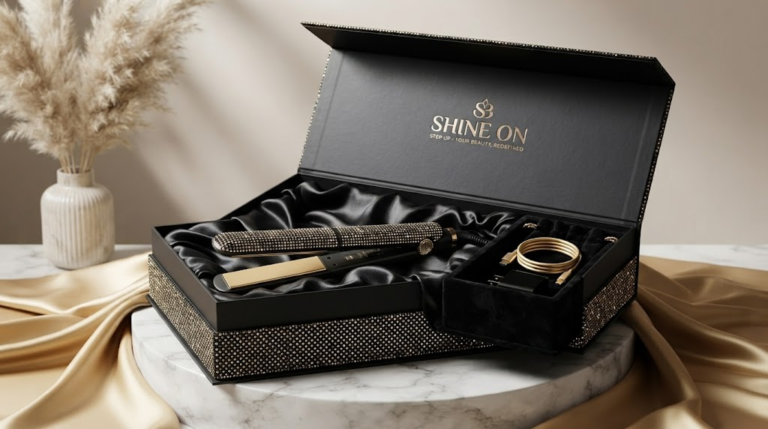
- Luxury Unboxing Presentation: Rigid magnetic gift boxes with EVA foam cutouts, branded heat-resistant travel mats, and velvet drawstring pouches transform your straightener into a luxury retail gift item.
Discover complete packaging options in our directory of Custom Packaging Solutions.
Managing Risks: MOQs, Warranty Reserves, and Customer Returns
The primary barrier for salon owners entering private labeling is the minimum order quantity MOQ. While large consumer electronics factories often demand 3,000 to 5,000 units per run, specialized salon appliance manufacturers offer flexible production tiers starting at 500 units for customized casing colors and laser-etched logos.
To safeguard salon cash flow, follow these operational risk management standards:
- Negotiate Spare Parts Reserves: Always require the factory to provide a 1% to 2% free unit overrun or FOC (Free of Charge) spare component reserve with your shipment to handle direct warranty exchanges.
- Implement a 1-Year Over-the-Counter Replacement: Avoid repairing broken units. Structure retail pricing so you can replace any defective tool on the spot. This policy turns occasional product failures into loyalty-building customer service moments.
- Avoid Unvented Overseas Trading Companies: Work directly with certified hardware manufacturers rather than sourcing middlemen on generic trading portals, ensuring you maintain a direct line to factory engineering teams.
3-Step Action Plan: How to Launch Your Custom Line
Bringing your salon-branded straightener to market follows a streamlined, three-step execution roadmap:
- Step 1: Order a Sample Evaluation Kit: Request factory-direct working prototypes featuring your preferred plate composition (Titanium or Ceramic MCH) to evaluate weight, balance, and thermal performance behind your styling chairs.
- Step 2: Finalize Digital Mockups and Packaging Dielines: Submit vector branding assets to receive 3D production renders, pantone-matched color swatches, and custom magnetic box templates.
- Step 3: Authorize Pre-Production Pilot Run: Place your initial 500-unit pilot production order with a 30% deposit, schedule independent third-party PSI (Pre-Shipment Inspection), and launch pre-orders across your salon client base.
Ready to Build Your Salon Hardware Line?
Partner with Light Power Tech to manufacture high-performance, certified custom straighteners engineered for professional salon results.
Frequently Asked Questions About White Label Flat Irons
What is the typical lead time for white label straightener production?
Pre-production sample creation and logo proofing take 7 to 10 business days. Full batch manufacturing for standard ODM orders of 500 to 2,000 units requires 25 to 35 business days, plus 15 to 30 days for ocean or air shipping depending on your chosen freight class.
Are white label hair straighteners dual-voltage for international travel?
Most professional-grade white label flat irons feature universal dual-voltage micro-circuitry (100V–240V AC, 50/60Hz). This allows your retail clients to use the tool worldwide with only a physical plug adapter.
How do I protect my brand against patent infringement claims?
Work exclusively with established appliance manufacturers that hold proprietary patent portfolios for their hinge mechanisms, plate suspensions, and heating circuits. Verify that your supplier owns valid utility and design patents for the chassis design you select.