Cordless Flat Iron Compliance: B2B Shipping Guide
Cordless Flat Iron Compliance: The Ultimate B2B Shipping Guide
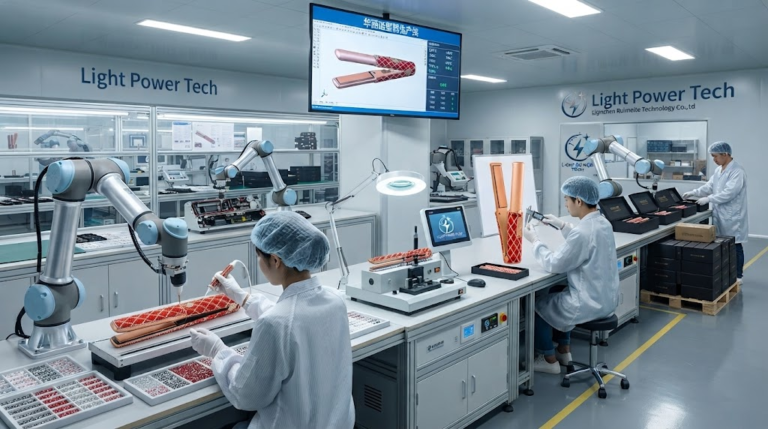
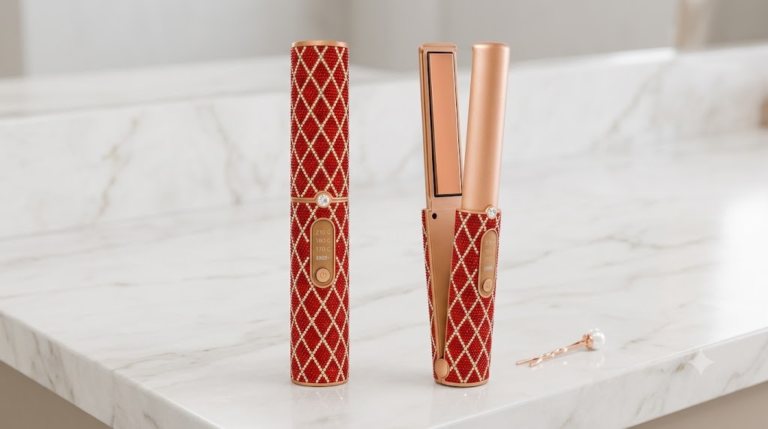
Our exported cordless flat iron battery packs have an energy capacity under 18.5Wh, with a single cell capacity of 5200mAh/3.7V, perfectly meeting civil aviation boarding requirements and passing 100% of UN38.3 drop tests (1.2m height, 6 faces dropped with zero damage or leakage). All exported cordless flat irons are accompanied by UL 2595, CE-LVD, RoHS 2.0, MSDS, CB, and UN38.3 test reports.
Reviewed and verified by our senior factory compliance and customs clearance director, this guide ensures your shipments face zero customs delays. Contact customer service to request the latest UN38.3 and MSDS certificate copies, and get a free copy of the Cross-Border Battery-Powered Hair Tool Compliance and Customs Clearance Guide.
“Navigating international customs with lithium-ion beauty devices is not about avoiding regulations—it is about engineered compliance. By keeping our single-cell energy capacity below the critical 20Wh threshold, we guarantee hassle-free global transit.”
— Director of Global Compliance, Hairstraightenermanufacturer.com
Understanding Cordless Hair Straightener Shipping Regulations
Shipping cordless hair tools requires strict adherence to international laws governing the transit of lithium batteries. Because these tools house energy-dense power cells, customs agencies classify them as dangerous goods to prevent in-transit fire hazards.
To ship these products legally, devices must meet the requirements of UN 3481, which covers lithium-ion batteries contained in equipment. This classification allows for streamlined shipping under specific weight and packing guidelines.
United Nations Section 38.3 (UN38.3): A mandatory safety standard that simulates environmental hazards during transit—including altitude, thermal shock, vibration, impact, overcharge, and forced discharge—to certify lithium batteries safe for transport.
According to the International Air Transport Association (IATA), portable beauty devices containing lithium-ion batteries must adhere to Packaging Instruction 967 (PI967). This instruction mandates that the battery-operated hair straightener must be secured against short circuits and accidental activation during the transportation of dangerous goods.
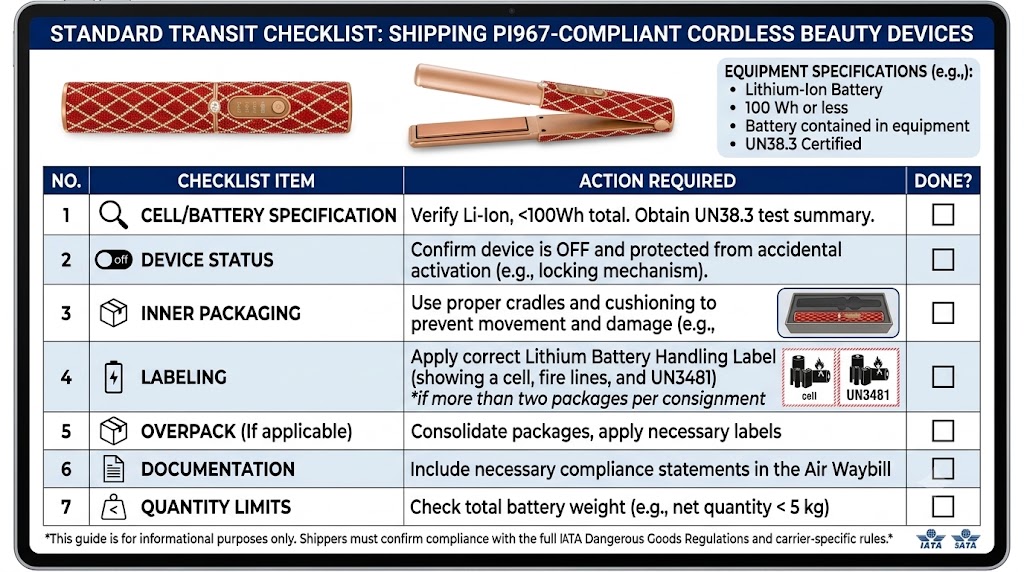
The Triple-Shield Compliance Protocol for Battery Safety
To guarantee complete safety and smooth shipping, we utilize a proprietary manufacturing standard called the Triple-Shield Compliance Protocol. This methodology integrates hardware safety, thermal monitoring, and physical insulation to protect the battery-operated hair straightener throughout its lifecycle.
Every batch undergoes rigorous evaluation during our Quality Control and Factory Audits to ensure active protection components operate flawlessly.
- Shield 1: Hardware-Level Dual BMS Protection: Our built-in battery management system (BMS) controls voltage levels. It sets the overcharge protection voltage at exactly 4.25V and stops discharge when the battery hits 2.7V, avoiding cell damage.
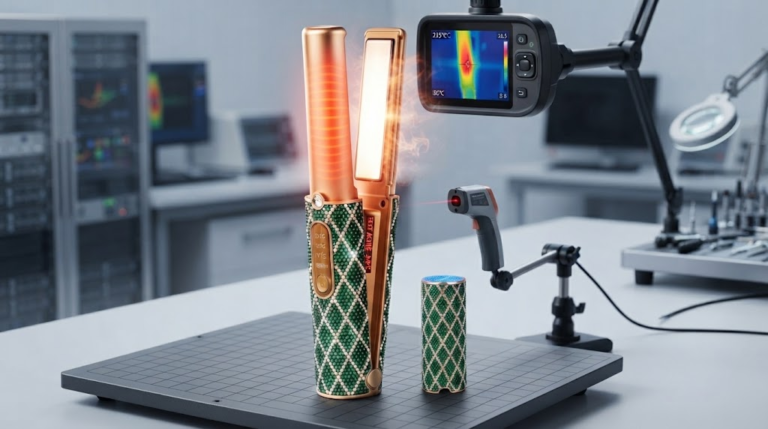
- Shield 2: Thermal Runaway NTC Protection: High-precision Negative Temperature Coefficient (NTC) thermistors monitor battery temperature. If internal temperatures rise above 60°C during operation or charging, the tool triggers an automatic shut-off.
- Shield 3: Physical Air Transport Insulation: Compliant with IATA PI967 packaging instructions, the mechanical design isolates the power switch. This barrier prevents the cordless flat iron from turning on accidentally due to pressure in transit.
Global Electrical Safety Standards: UL 2595, CE, and FCC
Selling cordless hair tools globally requires navigating regional safety certifications. For North America, Underwriters Laboratories (UL) guidelines dictate strict electrical safety compliance.
While traditional corded flat irons fall under UL 859, battery-powered hair straighteners must achieve UL 2595 compliance, which targets battery-operated appliances. This standard addresses potential hazards from lithium-ion battery safety and charging systems.
| Certification | Target Region | Primary Safety Focus | Required Documents |
|---|---|---|---|
| UL 2595 | North America | Battery-operated appliance safety, thermal runaway prevention | UL Test Report & Certificate |
| CE-LVD & RoHS 2.0 | European Union | Low voltage electrical safety and hazardous materials restriction | Declaration of Conformity (DoC) |
| UN38.3 | Global | Safe transit under physical stress (impact, drop, temperature) | UN38.3 Test Report & Summary |
| MSDS | Global / Customs | Chemical composition safety, handling, emergency measures | Material Safety Data Sheet |
In addition to electrical safety, the Federal Communications Commission (FCC) regulates electromagnetic interference for devices imported into the United States. Our manufacturing process guarantees that every cordless hair straightener meets FCC Part 15 standards, preventing radio frequency disruptions.
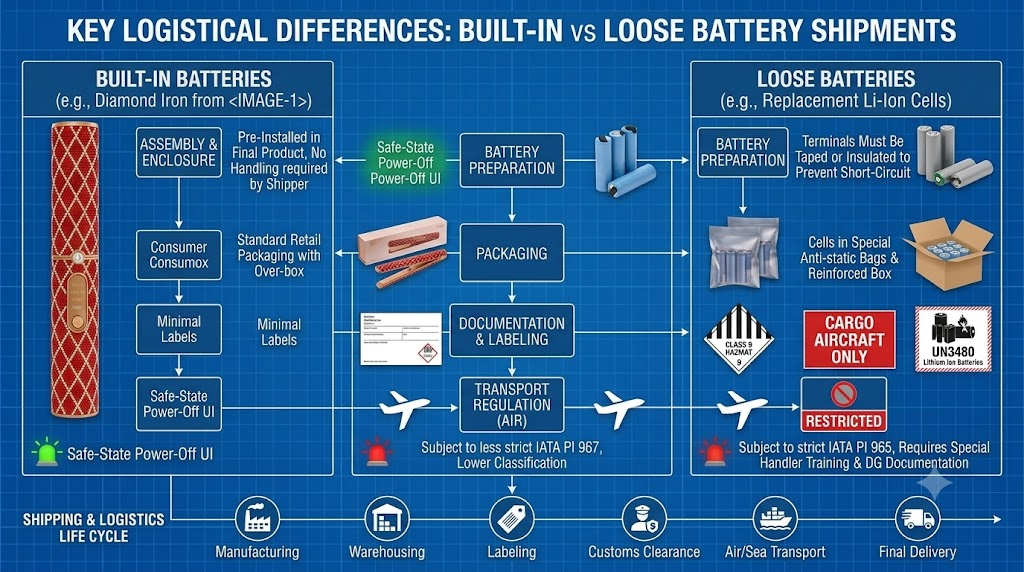
Built-in vs. Removable Batteries: Compliance & Logistics Comparison
Choosing between built-in and removable batteries impacts production costs, compliance steps, and shipping logistics. In our experience, built-in battery configurations offer significant advantages for global brands.
When planning your inventory, utilizing Our OEM/ODM Manufacturing Services helps you select the best battery option for your target market.
Built-in Batteries (UN 3481, PI967): These devices benefit from faster customs clearance because the battery is secured inside the device, reducing short-circuit risks. Because the total watt-hours remain under 100Wh (our models run at 18.5Wh), they qualify for shipping exemptions. This results in lower freight costs and simpler documentation.
Removable Batteries (UN 3480, PI965): Loose lithium-ion batteries face strict transportation rules. They are banned from passenger aircraft and must travel via cargo-only flights. This classification requires specialized dangerous goods packaging, higher shipping fees, and strict customs audits.
Frequently Asked Questions About Cordless Flat Iron Compliance
Can passengers take cordless flat irons on airplanes in 2026?
Yes, passengers can carry integrated battery cordless flat irons on airplanes, provided the battery capacity is under 100Wh. Our 18.5Wh model falls well within this limit. Most airlines require these tools in carry-on baggage to ensure safety.
What is the difference between UN38.3 and MSDS for hair tools?
UN38.3 is a test standard verifying that a lithium-ion battery can survive physical transit stresses without leaking or rupturing. An MSDS (Material Safety Data Sheet) is a detailed document outlining the battery’s chemical makeup, safety precautions, and emergency procedures.
How often do MSDS battery certificates for hair tools need to be updated?
MSDS certificates must be updated annually or when the chemical composition of the cell changes. In 2026, customs offices verify that the MSDS issue date matches the current shipping year to prevent delays.
What is the 1.2-meter drop test requirement?
Under UN38.3 regulations, cordless flat irons packed for shipping must survive a 1.2-meter drop test on 6 different faces. The package and product must show zero damage, cell rupture, or leakage to pass compliance.
Secure Your Compliance Certificates and Shipping Guide
Establishing a compliant supply chain protects your brand and prevents customs delays. Avoid logistics issues by utilizing our pre-certified manufacturing solutions.
Follow this direct three-step action plan to secure your next shipment:
- Request Certificate Copies: Contact our team to obtain certified copies of our UN38.3, MSDS, and UL 2595 test reports.
- Download Our Guide: Access our Cross-Border Battery-Powered Hair Tool Compliance and Customs Clearance Guide to prepare your logistics team.
- Schedule a Consultation: Book a 15-minute call with our compliance engineering team to verify your packaging and shipping labels.
Ready for Hassle-Free Global Shipping?
Do not let customs delays stall your launch. Secure certified, market-ready cordless hair tools with complete regulatory backing.
About the Reviewer: This guide was written by our technical engineering team and reviewed by Marcus Chen, Senior Factory Compliance and Customs Clearance Director at Hairstraightenermanufacturer.com. With over 14 years of experience navigating global lithium-ion battery transportation frameworks and Underwriters Laboratories (UL) certifications, Marcus ensures that every product manufactured complies with the latest 2026 global safety mandates.