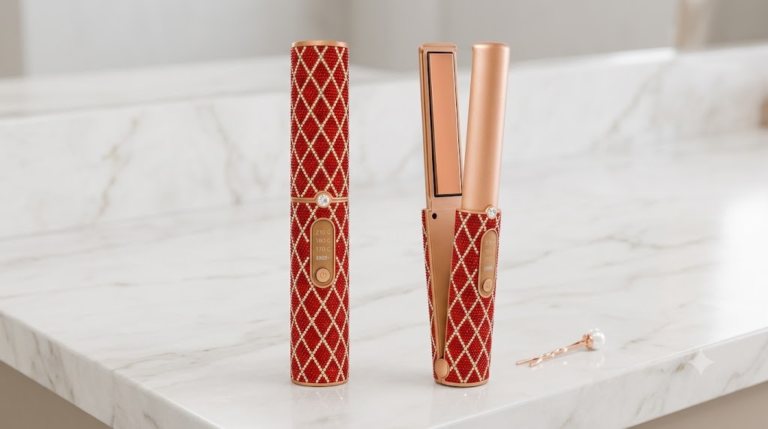
Hair Straightener OEM MOQs: Scaling Your Beauty Brand
Hair Straightener OEM MOQs: Scaling Your Beauty Brand
Navigating the supply chain in 2026 requires more than just finding a vendor; it demands a strategic partnership. For beauty entrepreneurs, the OEM hair straightener minimum order quantity (MOQ) is often the first major hurdle. It is not just a number—it is a reflection of a factory’s production efficiency, raw material procurement, and your brand’s financial health.
What is OEM MOQ? Understanding the Risk-to-Scale Ratio
In the world of Original Equipment Manufacturer (OEM) services, the MOQ is the lowest number of units a factory is willing to produce in a single run. This threshold exists because setting up automated assembly lines for high-precision tools, such as cordless straighteners with 20-second heat-up times, involves significant overhead.
The Minimum Order Quantity (MOQ) for professional hair straighteners generally ranges from 200 to 2,000 units. While 200 units might cover basic Private Labeling (logo on an existing shell), a full OEM project involving custom molds or proprietary PCBA (Printed Circuit Board Assembly) typically starts at 1,000 units to offset engineering costs.
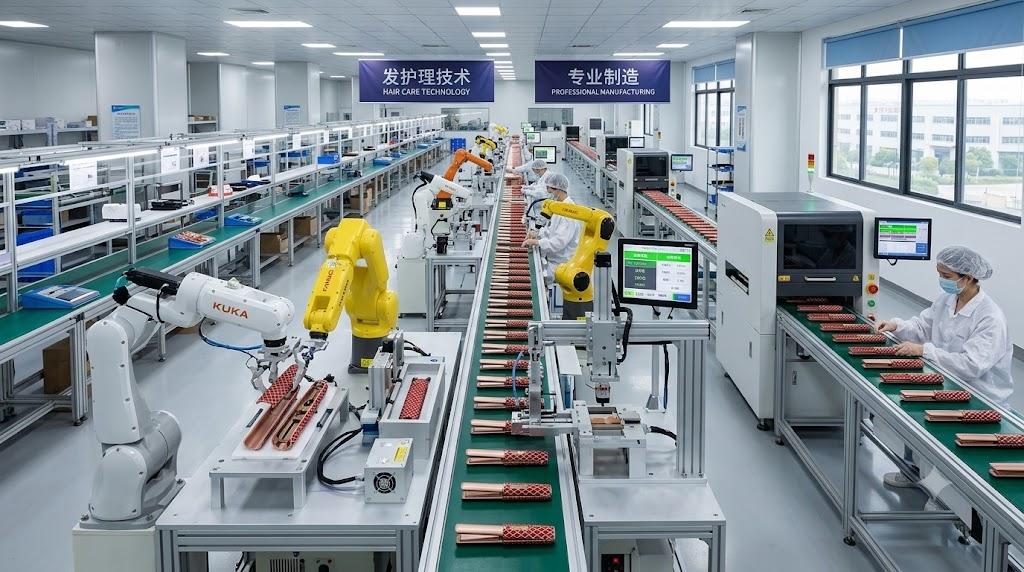
MOQ Definition: A contractual limit set by manufacturers to ensure that the production run covers fixed costs, including machine calibration, labor, and specialized component sourcing like Ceramic Tourmaline Technology.
At Light Power Tech, we view the MOQ as a “Risk-to-Scale Ratio.” A lower MOQ reduces your upfront capital risk but often results in a higher unit cost. Conversely, scaling your order allows us to optimize the supply chain management, passing the savings on to you.
The 3-Tier Scalability Matrix: Our Proprietary Sourcing Method
To help our partners grow, we developed the 3-Tier Scalability Matrix. This framework aligns your brand’s current stage with the appropriate level of product customization.
Tier 1: The Startup Launch (200 – 800 Units)
Ideal for influencer brands or niche market testing. Focus is on Custom Branding Options like logo placement and bespoke packaging. This tier uses existing high-performance shells to keep lead times short.
Tier 2: The Growth Phase (1,000 – 3,000 Units)
This is where “True OEM” begins. At this volume, brands can request custom colorways (Pantone matching), specific plate coatings, and modified firmware for heat settings. This tier offers the best balance of wholesale pricing and brand exclusivity.
Tier 3: The Enterprise Standard (5,000+ Units)
For established retailers and global distributors. This tier allows for completely unique industrial designs (new molds), proprietary battery configurations, and the lowest possible unit cost. At this level, Supply Chain Logistics become highly optimized for containers.
Comparison: Low MOQ vs. High Volume Manufacturing
Choosing your order volume is a trade-off between speed-to-market and profit margins. Our data from 2025-2026 shows that brands starting at Tier 2 often see a 15% higher retention rate due to more distinct product features.
| Feature | Low MOQ (200 pcs) | High Volume (3,000+ pcs) |
|---|---|---|
| Unit Cost | Premium ($$$) | Optimized ($) |
| Customization | Surface Level (Logo/Color) | Structural & Technical |
| Lead Time | 25-35 Days | 45-60 Days |
| QC Standards | Standard Batch Testing | Continuous AQL Inspection |
Hidden Costs in OEM: Mold Fees and Freight
When discussing the OEM hair straightener minimum order quantity, many first-time buyers overlook the non-recurring engineering (NRE) costs. If you require a unique shape, mold fees can range from $5,000 to $20,000 depending on the complexity of the heat-isolation sleeve and battery housing.
Furthermore, import duties and shipping and freight costs can fluctuate based on global trade policies. According to the World Trade Organization, electronics tariffs in 2026 have stabilized, but regional variations still apply. We recommend budgeting an additional 10-15% over the EXW price for landed costs.
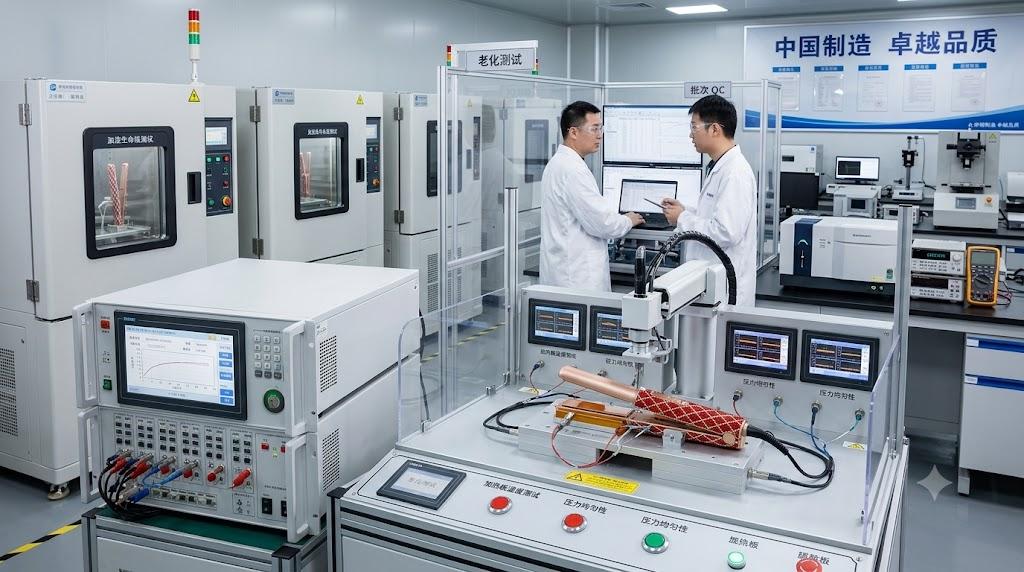
“The secret to a successful OEM launch isn’t just the MOQ; it’s the Quality control standards applied during Sample production. A single failed batch of lithium batteries can bankrupt a startup.”
— Lead Manufacturing Engineer, Light Power Tech
Niche Scenario: Low MOQ for Infrared and AI Hair Technology
As the market shifts toward hair health, infrared hair straightener OEM projects are surging. These tools require specialized emitters that are often more expensive to source. Similarly, AI hair tool manufacturing—where the device adjusts heat based on hair moisture—demands advanced sensors.
At Light Power Tech, we offer a “High-Tech, Low-MOQ” bridge. Because we maintain a constant inventory of Global Safety Certifications (CE, RoHS, FCC) for our core cordless modules, we can often accommodate smaller initial runs of these advanced technologies. This allows your brand to lead with innovation without the 5,000-unit commitment typically required by generic factories.
From MOQ Quote to Global Distribution
Ready to move forward? Follow our 3-Step Velocity Framework to ensure your B2B E-commerce venture starts on solid ground.
- Request a Sample Production Process: Never commit to an MOQ without testing the hardware. Verify the 20-second heat-up claim and battery longevity first-hand.
- Review Global Safety Certifications: Ensure the manufacturer has current 2026 documentation for your target market to avoid customs seizures.
- Finalize the 3D Branding Preview: Before the assembly line moves, we provide a digital twin of your product to confirm logo placement and color accuracy.
Ready to Scale Your Beauty Line?
Get a custom MOQ quote and a virtual factory tour of our cordless technology facility today.
Frequently Asked Questions About Hair Tool MOQs
Can I split my MOQ between two colors?
Generally, factories require a minimum of 200 units per color. This is because the plastic injection machines must be cleaned and recalibrated for each color change, which takes several hours.
Are samples included in the MOQ?
No, sample production is a separate cost. However, most professional manufacturers will credit the sample fee back to your account once the full OEM order is placed.
What are the standard payment terms for OEM orders?
The industry standard is a 30% deposit to begin production and the remaining 70% balance due after the final quality control inspection but before shipping.