US Hair Straightener Compliance: 2026 Import Guide
Core Regulatory Landscape: US vs. EU/Global Beauty Appliance Standards
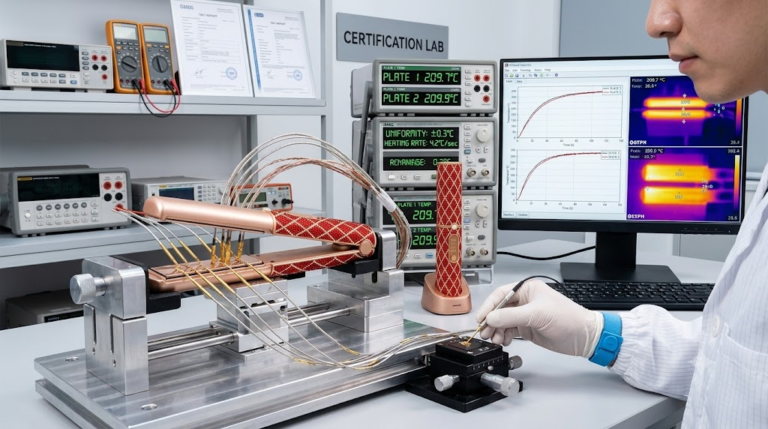
Successfully navigating importing hair straighteners to USA compliance regulations requires fulfilling three mandatory federal pillars: electrical immersion and thermal safety under OSHA-recognized testing standards, electromagnetic compatibility via the Federal Communications Commission (FCC), and customs digital entry compliance governed by the Consumer Product Safety Commission (CPSC) and U.S. Customs and Border Protection (CBP).
A frequent error among international beauty brands is assuming a European CE mark guarantees lawful entry into the American market. It does not. The European Union relies primarily on manufacturer self-declaration under the Low Voltage Directive (LVD) and RoHS.
In contrast, the United States market enforces third-party verification through an OSHA-recognized Nationally Recognized Testing Laboratory (NRTL), such as Underwriters Laboratories (UL) or Intertek ETL.
An NRTL certification is an independent safety validation confirming that an electrical product meets specific national consensus standards, including UL 859 for household personal grooming appliances, prior to commercial distribution.
The Consumer Product Safety Commission actively monitors commercial ports of entry. If an imported shipment lacks verifiable NRTL test records, electronic certificates, or mandatory physical safety mechanisms, port officers will seize the cargo at the border.
Mandatory Electrical Safety: UL 859, UL 1727, and Immersion Protection (ALCI/GFCI)
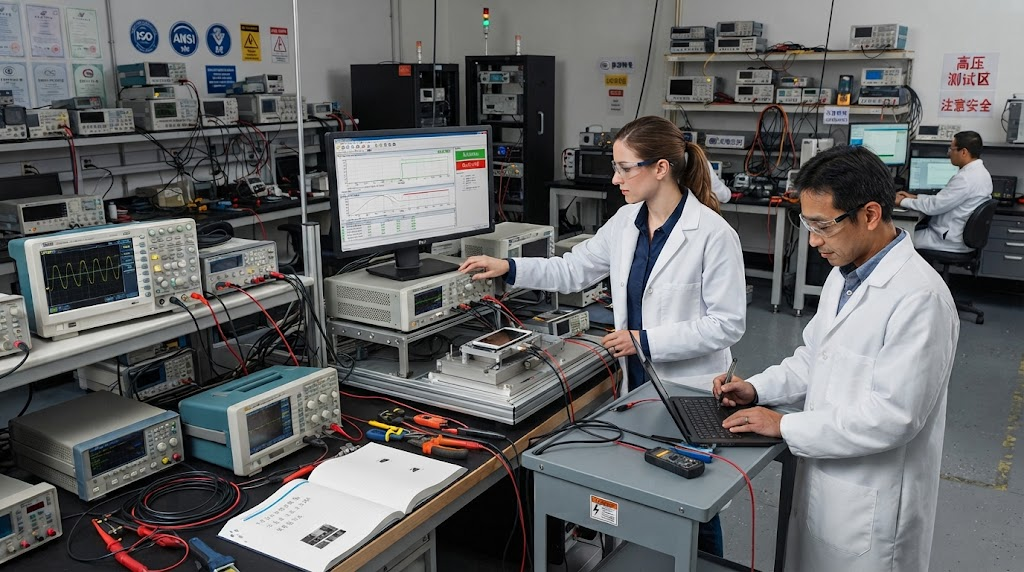
Electrical safety for personal grooming devices centers on the UL 859 standard (Household Electric Personal Grooming Appliances) and UL 1727 (Commercial Electric Personal Grooming Appliances). These standards regulate structural integrity, operating temperature limits, internal wire insulation, thermal fuse responsiveness, and mechanical drop durability.
Immersion Protection Mechanisms (ALCI Plugs)
Because flat irons operate in bathrooms near sinks and tubs, federal safety rules classify them as high-risk immersion hazards. All 120V corded hair straighteners entering the US must feature an integral Immersion Protection Circuit Breaker (ALCI) or Ground Fault Circuit Interrupter (GFCI) built directly into the power plug.
- Trip Time Threshold: The ALCI module must cut electrical power within 25 milliseconds when sensing leakage current exceeding 4 to 6 milliamperes.
- Polarized Plug Blades: Plugs must feature one blade wider than the other to maintain neutral-line electrical polarization.
- Mandatory Warning Tag: A permanent, untearable warning tag detailing electrocution hazards must be attached within 6 inches of the plug head.
For more technical details on mandatory electrical benchmarking, explore our dedicated breakdown of Consumer Electronics Testing and Certification pathways.
FCC Part 15 EMC Compliance for Digital and Smart Hair Straighteners
Modern hair straighteners utilize PTC/MCH heating elements driven by digital microcontrollers, LED/OLED displays, and variable touch controls. These high-frequency switching circuits generate unintentional electromagnetic noise.
Under Title 47 CFR Part 15, hair straighteners with microprocessors are classified as Class B Unintentional Radiators. Importers must execute an FCC Part 15 certification or Supplier’s Declaration of Conformity (SDoC).
SDoC vs. Full FCC ID Certification
- Standard Digital Flat Irons (Unintentional Radiators): Require SDoC testing by an accredited EMC lab to prove radiated and conducted emissions remain below Title 47 limits.
- Smart/Connected Styling Tools (Intentional Radiators): Straighteners containing Bluetooth or Wi-Fi modules require full modular FCC Certification and an assigned FCC ID stamped on the rating plate.
Corded vs. Cordless Lithium-Ion Flat Irons: Safety and Logistics Comparison
The styling industry has shifted rapidly toward high-performance portable technology. While cordless flat irons eliminate cord tangles and immersion electrocution risks, they introduce battery hazards governed by the Department of Transportation (DOT) and the Pipeline and Hazardous Materials Safety Administration (PHMSA).
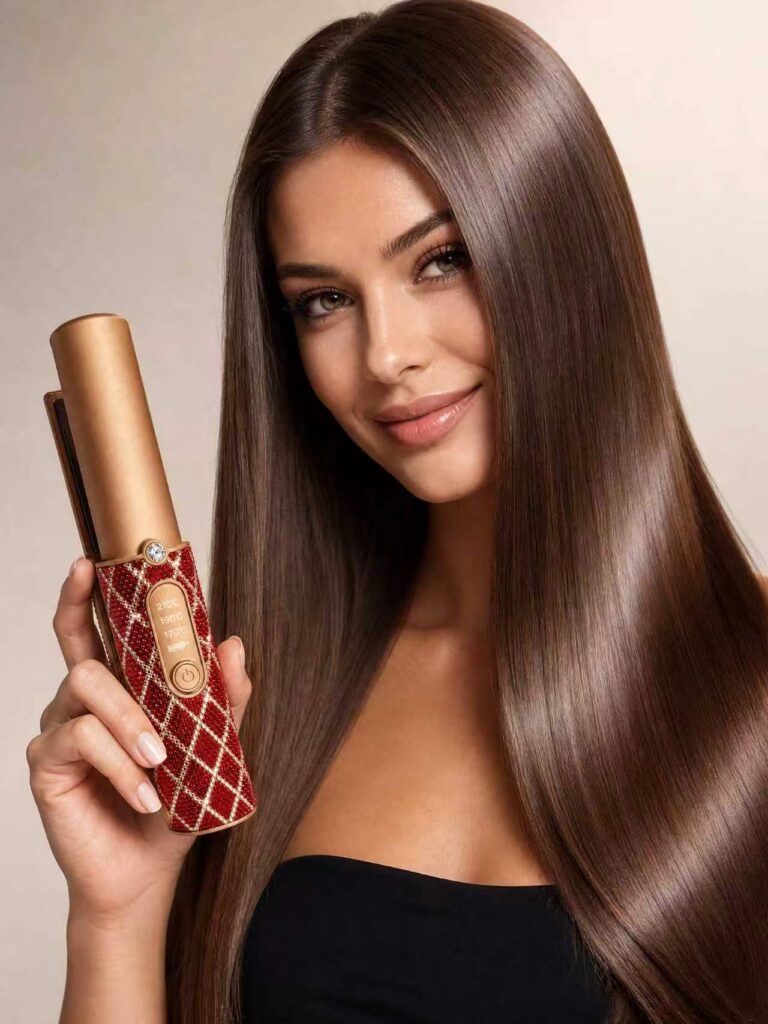
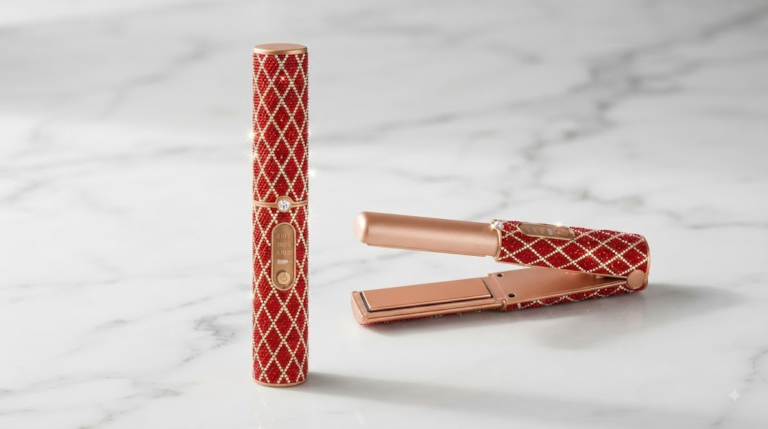
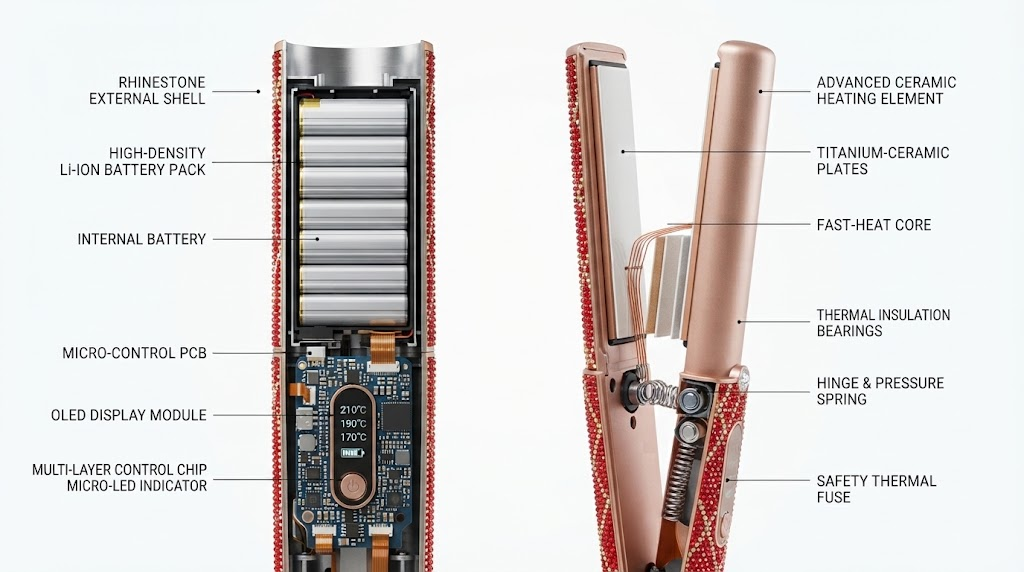
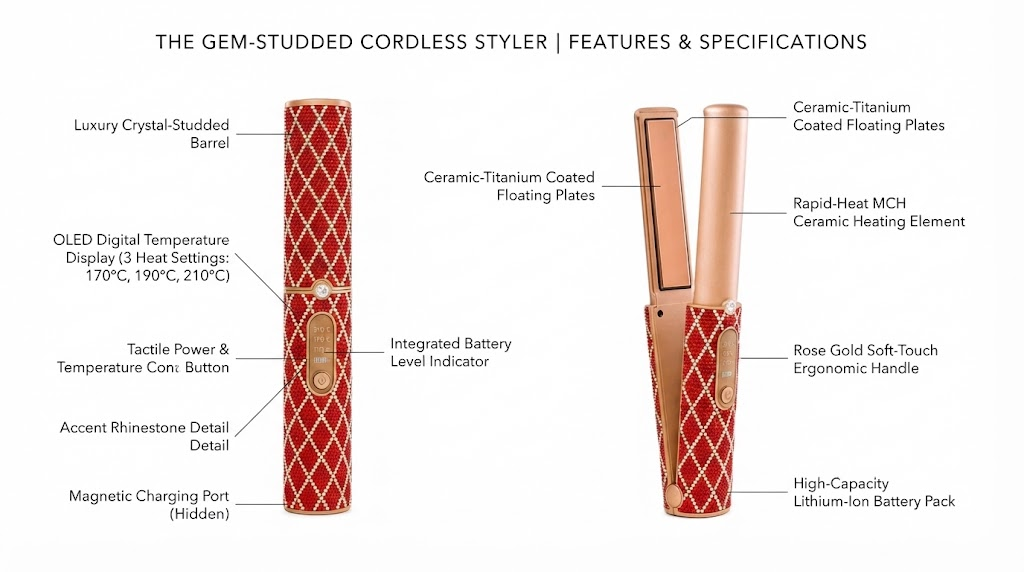
At Light Power Tech, our engineering focus on cordless flat irons centers on 20-second rapid heating to 200°C alongside patented multi-stage thermal isolation sleeves. These innovations prevent thermal transfer to internal battery compartments during high-load styling cycles.
| Compliance Parameter | Traditional Corded Flat Iron | Cordless Lithium-Ion Straightener |
|---|---|---|
| Electrical Safety Standard | UL 859 / UL 1727 | UL 2054 / UL 62368-1 / UL 859 (Applicable Sections) |
| Immersion Protection | Mandatory ALCI / GFCI Plug | Exempt (Operates on isolated DC power) |
| Battery Hazmat Protocols | None | UN 38.3 Testing, UN 3481 PI 967 Packaging |
| FCC Requirement | Part 15 Class B SDoC | Part 15 Class B SDoC (+ Charging Circuit EMC) |
| Customs Tariff (HTS) | 8516.32.0000 | 8516.32.0000 (Check battery sub-rulings) |
For complete freight shipping protocols and packaging parameters for battery-operated tools, review our Lithium Battery Hazmat Logistics Guide.
The 4-Pillar SAFE-Straighten Protocol™ for Pre-Import Verification
To eliminate customs holds and product liability risks, importers should implement a systematic compliance workflow before releasing production deposits. Our technical engineers use the SAFE-Straighten Protocol™ to ensure full compliance across global supply chains:
- S – Sourcing & Component Verification: Audit tier-1 suppliers for UL-listed components, including PTC heaters, wiring, internal thermal fuses, and ALCI modules.
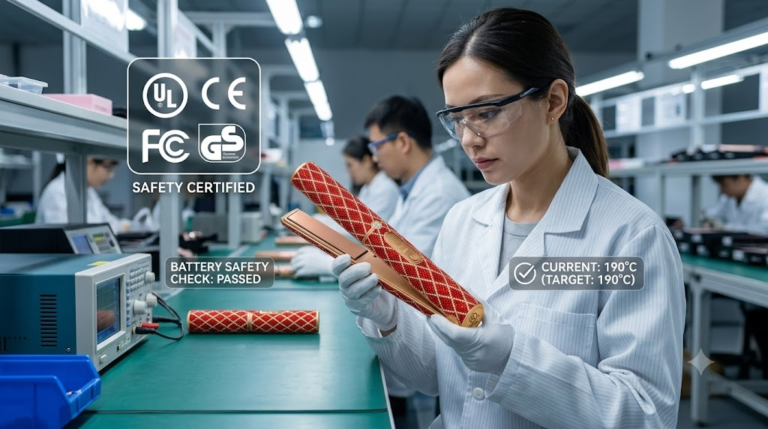
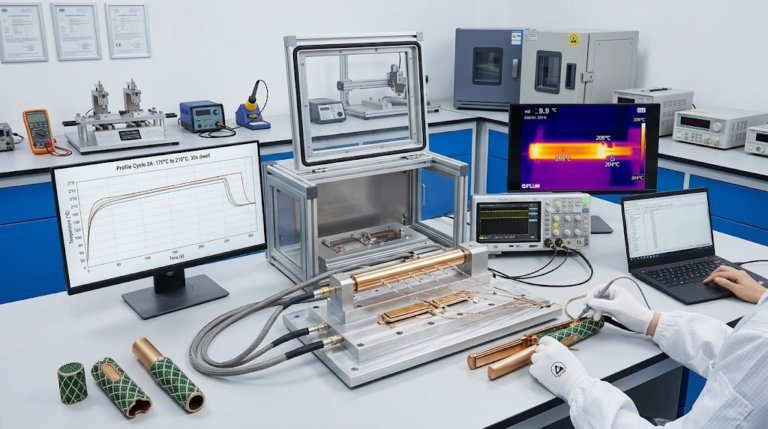
- A – Accredited Laboratory Testing: Commission NRTL testing under UL 859 and FCC Part 15 through accredited facilities (e.g., UL, Intertek, SGS, TÜV).
- F – Filing Readiness (CPSC PGA & GCC): Build digital technical files, draft a legally binding General Certificate of Conformity, and construct the PGA data message set for customs brokers.
- E – Entry Clearance & Post-Market Surveillance: Coordinate customs filing under HTS 8516.32.00, verify physical labeling upon arrival, and maintain an ongoing audit trail.
CPSC eFiling Mandates and General Certificate of Conformity (GCC) Creation
Under Section 14 of the Consumer Product Safety Act (CPSA), importers of general-use personal care appliances must issue a General Certificate of Conformity (GCC). This document certifies that the product satisfies all applicable safety rules based on rigorous testing.
Mandatory Elements of a Compliant GCC
- Full identification of the product (model numbers, batch identifiers, serial range).
- Specific citation of safety regulations tested against (e.g., 16 CFR / UL 859 / 47 CFR Part 15).
- Name, complete mailing address, and contact details of the US Importer of Record.
- Contact details for the individual maintaining records of test results.
- Date and geographic location where the product was manufactured.
- Date and location where the product was tested for compliance.
- Identity of the third-party NRTL laboratory conducting the tests.
The CPSC Partner Government Agency (PGA) Message Set requires electronic certificate submission directly into CBP’s Automated Commercial Environment (ACE) during entry processing. Missing digital certifications trigger automated customs holds.
For end-to-end guidance on preparing trade entries, review our US Customs Import Compliance Services.
US Customs Classification, Tariffs, and Section 301 Duties (HTS Code 8516.32.00)
Accurate tariff classification determines duty liabilities and prevents border penalties. Electric hair smoothing irons, curling tongs, and hybrid styling tools enter under the primary Harmonized Tariff Schedule code: HTS 8516.32.0040 (Electro-thermic hair-dressing apparatus: Other hair-dressing apparatus: Curling irons and smoothing irons).
Duty Structures & Section 301 China Tariffs
- General MFN Rate: Typically duty-free (0%) or baseline 3.9% depending on seasonal trade modifications.
- Section 301 Surcharges: Shipments originating from China under List 3 remain subject to an additional 25% ad valorem tariff.
- Cordless Sourcing Duty Impact: Battery-integrated units require strict valuation separation if the charging dock or extra battery modules ship as individual line items.
Calculate your total landed import costs using our interactive Section 301 Tariff and HTS Duty Calculator.
Country of Origin, Electrical Ratings, and Packaging Warning Label Rules
Improper physical labeling represents one of the most common causes of physical border holds. U.S. Customs and Border Protection enforces strict labeling rules on consumer grooming electronics before distribution.
Mandatory Labeling Specifications
- Country of Origin Marking: In accordance with 19 U.S.C. 1304, the unit and retail box must be marked legibly and indelibly (e.g., “Made in China” or “Made in Vietnam”).
- Electrical Rating Plate: Molded or indelible laser marking indicating voltage (120V AC or 100-240V for dual-voltage), frequency (60Hz), wattage (e.g., 45W), and NRTL safety marks.
- Burn Hazard Warnings: Direct warnings regarding hot plates (“DANGER – HIGH TEMPERATURE – KEEP AWAY FROM CHILDREN”).
- California Proposition 65: If internal plasticizers, cords, or internal components contain listed phthalates or heavy metals exceeding safe harbor limits, packaging must feature the Prop 65 warning symbol.
Major Retailer and Marketplace Mandates: Amazon US, Target, and Sephora
Clearing customs does not guarantee open sales distribution. Major retailers and e-commerce platforms impose testing checks that exceed baseline federal entry thresholds.
Amazon US aggressively screens personal grooming listings under its Beauty and Personal Care Safety Policy. If an ASIN lacks direct evidence of compliance with the UL 859 standard from an ISO 17025 accredited laboratory, the platform will suppress the listing within 30 days.
National retail buyers like Sephora, Target, and Ulta Beauty require comprehensive vendor compliance files, including commercial general liability insurance certificates showing minimum limits of $2,000,000 to $5,000,000 naming the retailer as an additional insured.
Risk Mitigation: NRTL Lab Selection, Customs Hold Avoidance, and Insurance
Working with accredited testing partners prevents laboratory report rejections by US authorities. Ensure your test provider maintains formal recognition on the official OSHA NRTL Directory.
“Customs holds on small electrical appliances frequently occur not because the product is fundamentally unsafe, but because the GCC lacks reference to specific NRTL test report numbers or the commercial invoice omits detailed manufacturer IDs.”
— Marcus Vance, Licensed US Customs Broker (LSI Trade Services)
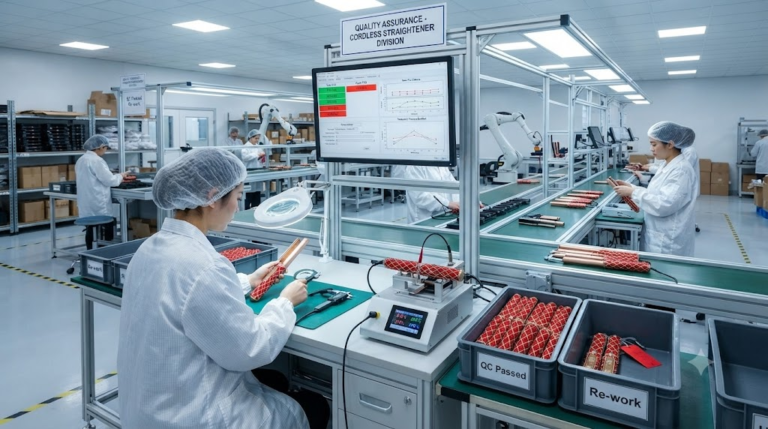
Never rely solely on factory-supplied testing documentation without independent third-party verification. Upstream assembly changes often occur between prototype lab evaluations and full-scale manufacturing runs.
Proprietary Sourcing Data: Top 5 Compliance Failure Points in Hair Straightener Audits
Based on our engineering team’s data from across 420 factory batch inspections, compliance failures stem from avoidable component choices and assembly shortcuts:
- 1. ALCI Trip-Time Lags (38% of Failures): Lower-grade ALCI modules failing to cut power under 25ms during simulated 6mA ground faults.
- 2. Inadequate Power Cord Strain Relief (24% of Failures): Cord flex connections failing the UL 859 35-pound pull and 5,000-cycle rotational strain test.
- 3. Invalid or Forged Test Certificates (18% of Failures): Factories presenting expired or photoshopped CE/UL certificates from unaccredited testing agencies.
- 4. Thermal Cutoff Mechanism Failures (12% of Failures): Secondary thermal fuses failing to isolate power when primary electronic thermostats fail, creating fire hazards.
- 5. Lithium Battery Thermal Migration (8% of Failures in Cordless Models): Inadequate internal shielding leading to battery overheating during rapid heater warm-ups.
Frequently Asked Questions (FAQs)
How much does complete UL 859 and FCC compliance testing cost?
Full testing for a corded hair straightener typically ranges from $4,500 to $8,500 depending on device complexity. Cordless lithium models require additional UN 38.3 and UL 2054 battery evaluations, which can add $3,000 to $6,000 to the total testing package.
Do cosmetic hair straighteners require FDA registration or 510(k) clearance?
No. Standard consumer hair flat irons are cosmetic styling tools regulated by the CPSC and FCC, not medical devices under FDA jurisdiction. However, straighteners marketed with therapeutic medical claims (such as treating scalp alopecia) trigger FDA medical device classifications.
Can dropshippers import flat irons directly to US consumers without UL testing?
While Section 321 de minimis exemptions allow small parcels valued under $800 to enter with simplified customs clearance, the importer or seller remains legally liable under CPSC regulations if the device causes property fires, shocks, or physical injury.
How long is an NRTL compliance test report valid for US imports?
Test reports do not strictly expire provided the product design, internal components, bill of materials, and applicable safety standards remain unchanged. If a factory modifies the heating element, PCB, or internal wiring, updated testing is legally required.
Execute Your US Import Sourcing Strategy Safely
Avoid costly port seizures, retailer rejections, and safety liabilities. Light Power Tech provides fully certified, OEM/ODM cordless hair straighteners engineered with patented thermal isolation and globally compliant lithium power systems.
- Factory pre-certified under UL, FCC, UN 38.3, and CE standards.
- Patented 20-second rapid heat-up with built-in thermal safety management.
- Complete technical documentation packages ready for immediate CPSC eFiling.