Start Your Hair Straightener Brand: Low MOQ Guide (2026)
How to Launch a Private Label Hair Straightener Brand with Low MOQ
The beauty tech landscape in 2026 has shifted away from massive, monolithic launches. Today, the most successful hair care electronics brands start as “micro-brands,” focusing on specific niches like cordless travel tools or high-heat professional irons.
To start a private label hair straightener brand with a low MOQ, you must partner with a manufacturer that offers “shared tooling.” This allows you to place your logo on high-performance, pre-existing designs while maintaining a low financial barrier to entry.
The Micro-Brand Hardware Framework: Defining Your Entry Point
Private Labeling: A manufacturing process where a factory produces a product based on an existing design, which is then branded and sold by another company.
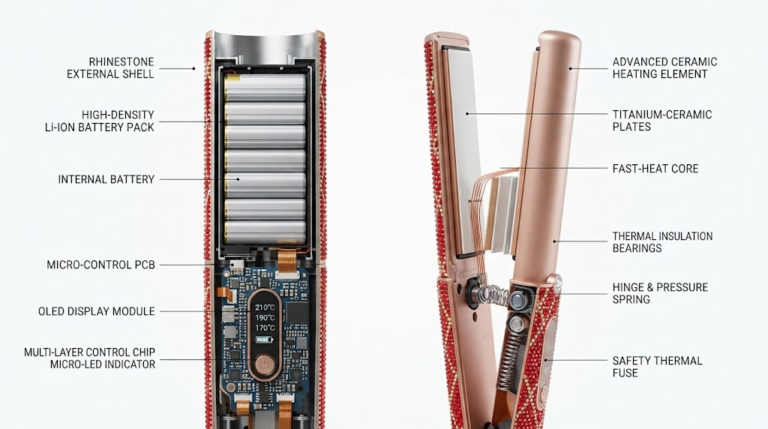
At Light Power Tech, we utilize the Micro-Brand Hardware Framework. This methodology moves beyond simple reselling by focusing on three technical pillars: battery density, heat recovery speed, and plate material purity.
Instead of competing on price, micro-brands compete on a specific technical specification. For example, focusing exclusively on “20-second heat-up time” makes your brand the go-to for busy professionals.
This framework ensures that even with a low MOQ, your product doesn’t feel like a generic “white label” tool. You are selling a performance-driven asset, not just a plastic shell with a logo.
The ‘3D-Rapid Design’ Protocol for Custom Packaging
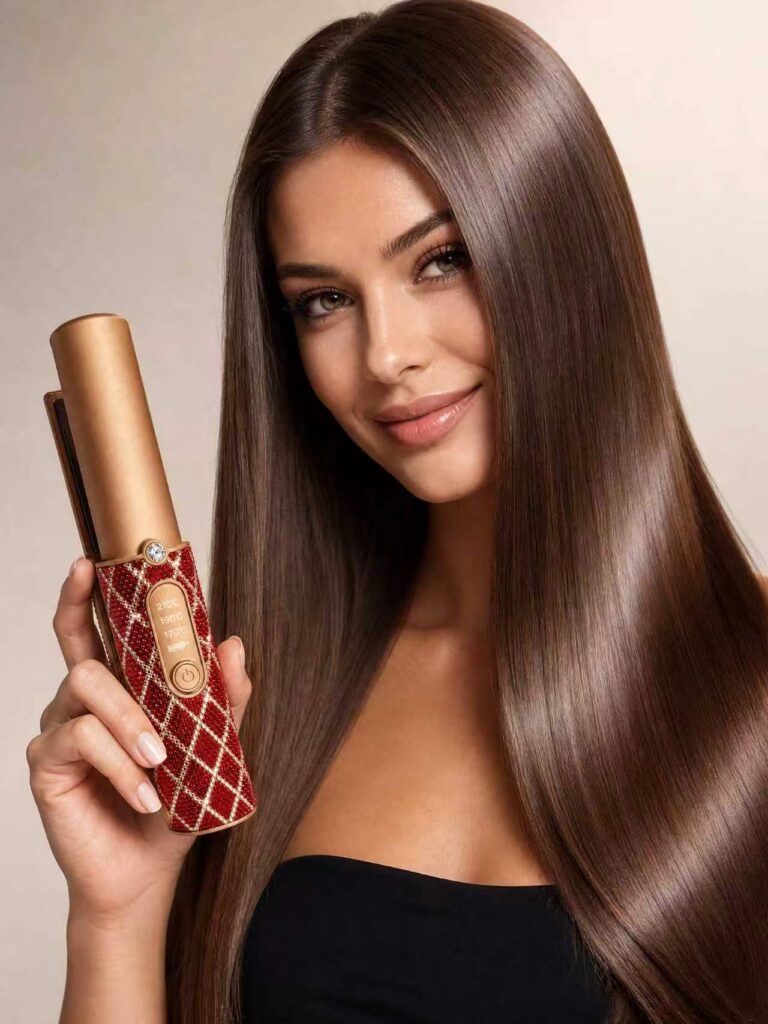
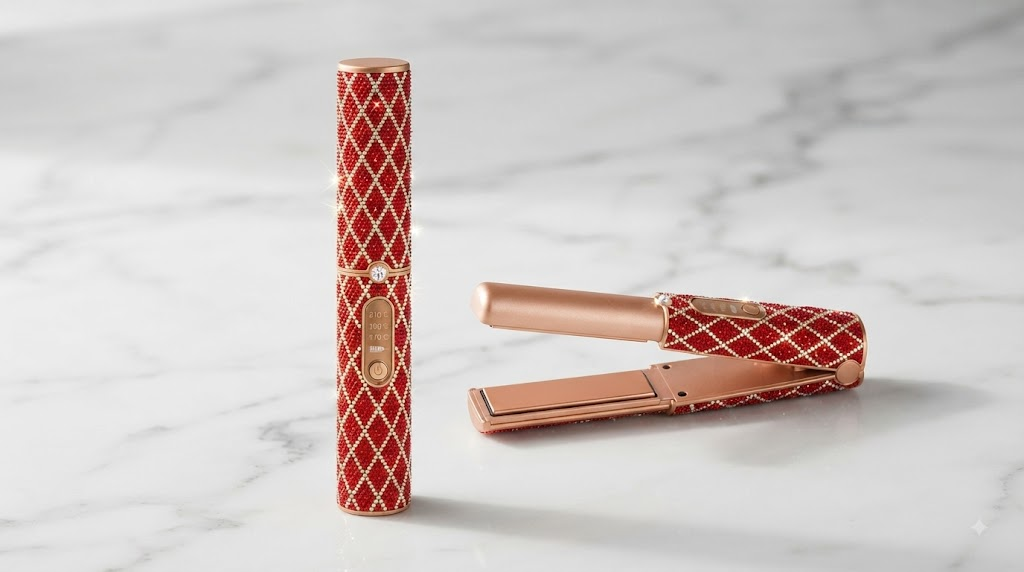
One of the biggest hurdles for new brands is the cost of physical prototypes. We solve this through our 3D-Rapid Design Protocol, which uses high-fidelity AI-design integration to create packaging mockups.
Before any physical mold is touched, you can see exactly how your custom logo placement will look on the handle and the box. This reduces the need for multiple rounds of shipping physical samples back and forth.
Digital prototyping allows you to start your influencer marketing early. You can use these 4K 3D renders for “coming soon” social media posts, building social proof before your inventory even leaves our factory.
Sourcing and Manufacturing: Finding Reliable Low MOQ Partners
Finding a manufacturing partner willing to work with low MOQ requirements requires deep vetting. Many wholesale flat irons found on mass marketplaces lack the internal safety components required for long-term durability.
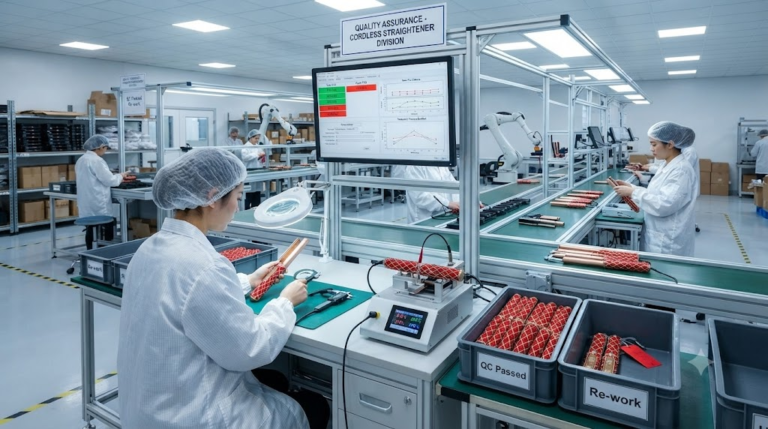
When sourcing suppliers, you must ask for factory audits conducted within the last 12 months. A reliable partner will be transparent about their quality control standards and their supply chain management practices.
Check out Our Manufacturing Services to see how we balance high-end OEM hair straightener production with the flexibility needed for growing brands.
Negotiating MOQs is often about the packaging, not the tool. Often, the factory can do 100 units of the tool, but the box manufacturer requires 500. We recommend our Sourcing Guide for Small Business to learn how to bridge this gap.
Technical Comparison: Ceramic vs. Tourmaline vs. Titanium
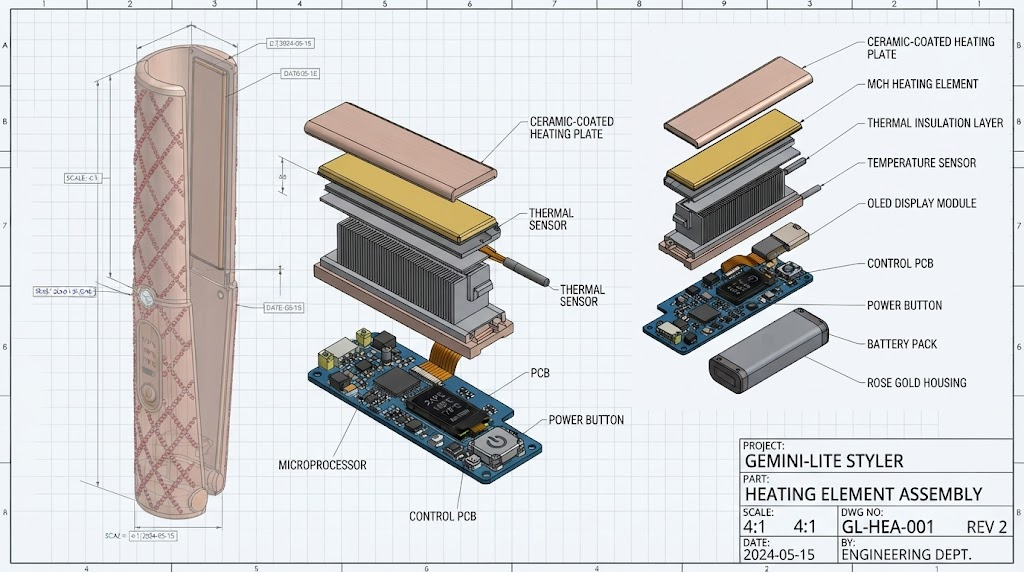
Choosing the right plate technology is the most critical decision for your brand differentiation. Your target market’s hair type should dictate your choice between PTC vs MCH heaters and plate materials.
| Technology | Best For | Heat Speed | Durability |
|---|---|---|---|
| Ceramic (PTC) | Fine to Normal Hair | Moderate | High |
| Titanium (MCH) | Thick, Coarse Hair | Ultra-Fast | Extreme |
| Tourmaline / Ionic | Frizzy, Damaged Hair | Moderate | Moderate |
Ionic hair straighteners are currently the top-selling category for E-commerce brands due to their visible “instant-smooth” results. Combining Tourmaline technology with MCH heaters offers the premium experience customers expect in 2026.
Calculating Your Total Landed Cost (TLC) for Hardware
The unit price is only one part of the equation. To remain profitable, you must calculate the Total Landed Cost (TLC). This includes shipping and logistics, import duties, and a “scrap rate” (units damaged during transit).
In our experience, new brands often forget to budget for product liability insurance. This is essential when selling electronics that reach 450°F. Your supply chain costs should also account for 3-5% of units being held for quality testing.
Successful dropshipping hair tools models often fail because they ignore the TLC, leading to razor-thin margins. By moving to private label, you control the margin by owning the brand equity.

Navigating Global Compliance: MoCRA, CE, and RoHS
Selling beauty electronics requires navigating a complex web of Beauty Tech Compliance Standards. In the US, the MoCRA compliance (Modernization of Cosmetics Regulation Act) now extends its influence over how tools are marketed alongside topicals.
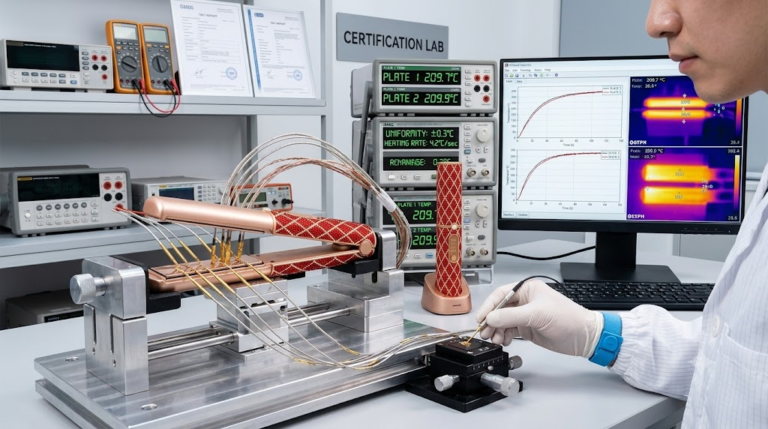
For European markets, CE certification and RoHS standards are mandatory. These ensure the device doesn’t contain hazardous materials and won’t interfere with other electronics. You can find a full checklist in our Compliance Guide.
Failure to provide these certificates can result in your shipment being destroyed by customs. Always verify that your manufacturer’s test reports are from accredited third-party labs like SGS or Intertek, as noted in the ISO International Standards.
The Micro-Influencer Hardware Launch Playbook
With a low MOQ inventory, you cannot afford a celebrity endorsement. Instead, focus on “Hardware-First” influencer marketing. Send units to stylists who focus on the mechanics of the tool—those who talk about heat recovery and plate alignment.
This launch strategy builds social proof through technical expertise rather than just aesthetic appeal. In 2026, consumers are more likely to trust a professional stylist’s review over a generic lifestyle post.
Create short-form video content showing the tool heating up in real-time. Transparency in performance is the fastest way to convert E-commerce traffic into sales.
Frequently Asked Questions
How do I handle warranty management for a new brand?
We recommend building a 2% “replacement reserve” into your pricing. Instead of repairing tools, which is costly for low MOQ brands, simply replace defective units. This builds immense customer trust.
Is dropshipping better than private label for hair tools?
Dropshipping is lower risk but offers zero brand equity. Private label allows you to build a company that can eventually be sold. In 2026, the market favors brands that own their ODM manufacturing relationships.
Can I get a sample before committing to a 500-unit MOQ?
Absolutely. Any reputable sourcing partner will provide paid samples. Never skip this step; you must test the after-sales support and hair tool troubleshooting capabilities of the factory yourself.
Ready to Build Your Beauty Empire?
Stop guessing about hardware specs. Get a 3D mockup of your brand today.