Global Hair Straightener Certification Guide (2026)
Global Hair Straightener Certification Guide (2026)
Defining the 2026 Compliance Landscape
Navigating hair straightener certification requirements in 2026 requires a shift from viewing compliance as a hurdle to treating it as a strategic asset. Global regulators have tightened oversight on thermal stability and battery safety, particularly for high-performance cordless tools.
Certification for hair straighteners involves passing rigorous electrical safety testing and EMC compliance to ensure the device does not interfere with other electronics or pose a fire risk. In 2026, the focus has expanded to include chemical safety of plates and sustainable lifecycle documentation.
“Compliance is no longer just a sticker on a box; it is the fundamental proof of engineering integrity. In our testing at Light Power Tech, we’ve seen that brands prioritizing early-stage Global Compliance Services reduce their time-to-market by an average of four months.” — Lead Compliance Engineer, Light Power Tech.
The ‘Global Safety-First’ Protocol: Our Proprietary Methodology
We define the Global Safety-First Protocol as a streamlined, four-stage framework designed to unify disparate international standards into a single manufacturing workflow. This methodology prevents the need for costly hardware redesigns late in the production cycle.
The protocol begins with a Harmonized Component Review, where we verify that every internal part—from the MCH heater to the lithium-ion cell—carries individual UL or IEC recognitions. This foundation simplifies the final product certification process across the US, EU, and Asia.
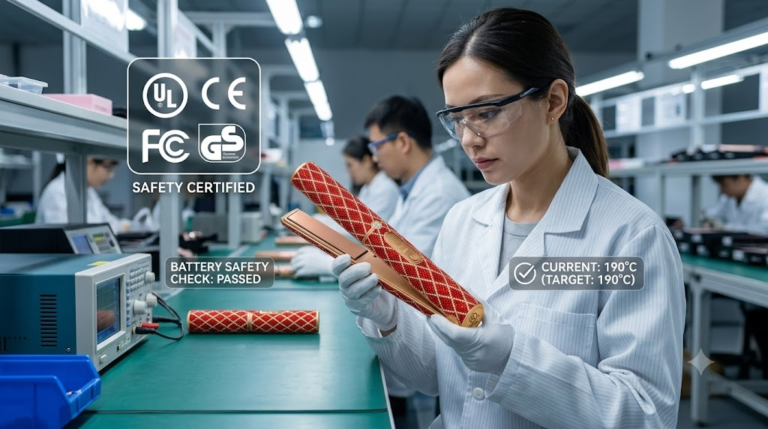
By integrating Product Safety Testing Labs into the R&D phase, we ensure that EMC compliance and thermal insulation are verified before the first mass-production unit ever leaves the assembly line.
US Market: FDA MoCRA and FCC Part 15 Compliance
Entering the United States requires more than just a standard plug. As of 2026, the FDA MoCRA (Modernization of Cosmetics Regulation Act) has fully integrated electronic beauty tools into its safety reporting ecosystem, requiring manufacturers to maintain detailed safety substantiation records.
FCC Part 15 and NRTL Testing
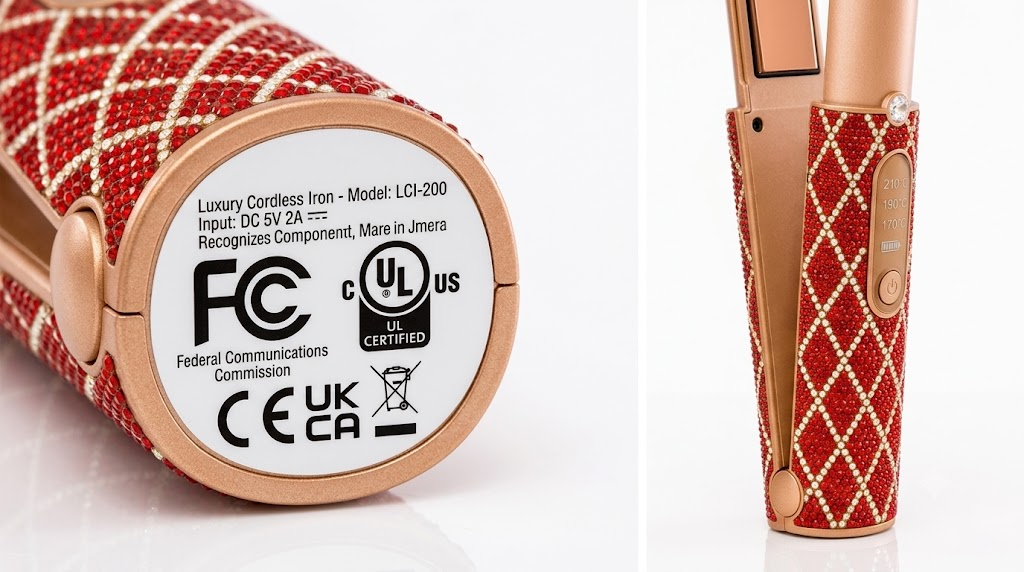
The Federal Communications Commission (FCC) mandates that hair straighteners, especially those with digital displays or wireless charging, comply with Part 15 regulations regarding electromagnetic interference. This ensures your tool won’t disrupt Wi-Fi or cellular signals in a home or salon.
While UL (Underwriters Laboratories) is the most recognized mark, any Nationally Recognized Testing Laboratory (NRTL) can certify your product to UL 859 standards. This covers basic safety requirements for household electric personal grooming appliances.
European Union: CE Marking and LVD Directives
To sell in the EU, a hair straightener must carry the CE marking. This is not a single certification but a declaration that the product meets several underlying directives, including the Low Voltage Directive (LVD) and the Electromagnetic Compatibility (EMC) Directive.
| Directive | Focus Area |
|---|---|
| LVD 2014/35/EU | Electrical safety for devices between 50-1000V AC. |
| EMC 2014/30/EU | Prevention of electromagnetic interference. |
| RoHS 2011/65/EU | Restriction of hazardous substances like lead or mercury. |
The Declaration of Conformity (DoC) is the final document signed by the manufacturer, asserting that the product meets all relevant standards. For more on preparing this, see our Regulatory Documentation Support.
Japan Market: Navigating PSE Diamond vs. Circle
Japan’s Product Safety Electrical Appliance & Material (PSE) law is strictly enforced by METI. Hair straighteners generally fall under two categories depending on their technical design and whether they are marketed as “specified” or “non-specified” appliances.
PSE Diamond (Category A): Required for high-risk appliances. This involves mandatory third-party inspection and factory audits. Most professional-grade corded straighteners sold in Japan require this level of scrutiny.
PSE Circle (Category B): Generally applies to lower-risk appliances. The manufacturer can self-declare compliance after testing, but must still maintain a rigorous technical file. In 2026, many cordless models transition between these categories based on battery density.
Technical Testing Procedures: From Thermal Safety to Drop Tests
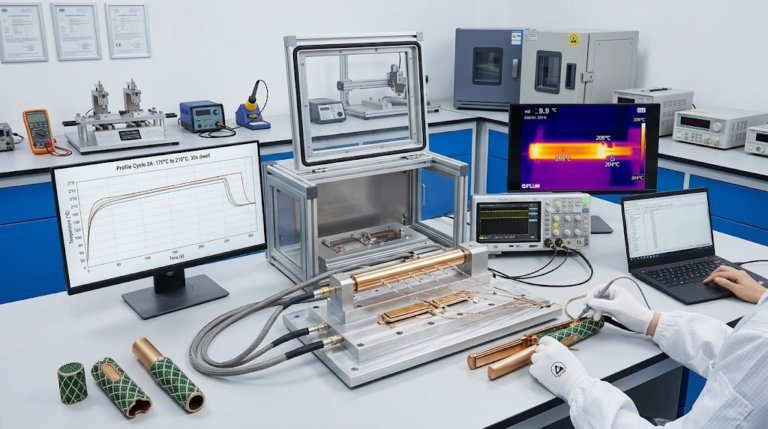
Laboratory testing is the core of any product certification process. For hair tools, the most critical test is leakage current, which ensures the user is never at risk of electric shock, even in humid bathroom environments.
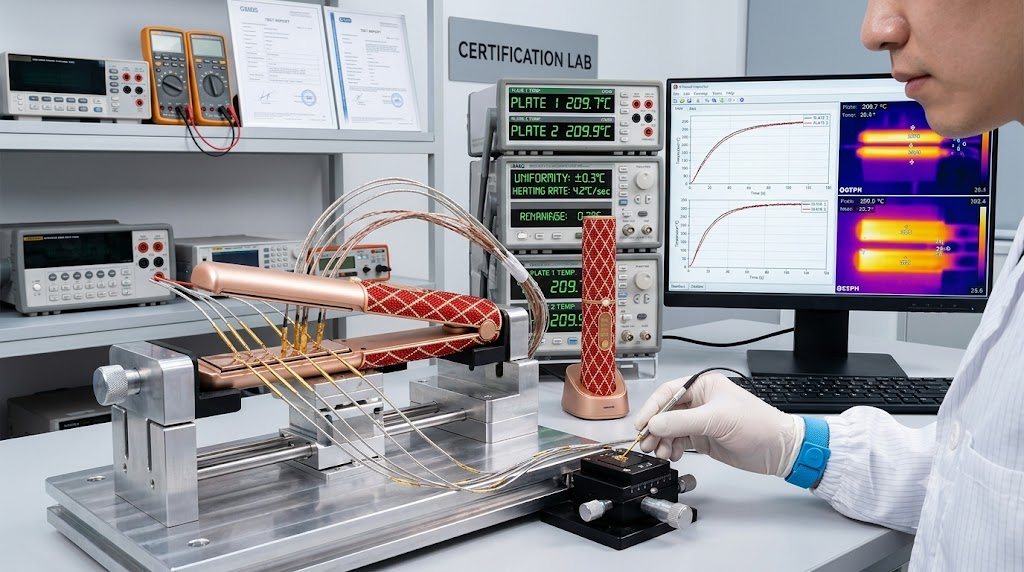
Thermal Safety Testing: We verify the auto-shutoff mechanism and the temperature accuracy of the plates. In 2026, premium tools are tested for “Thermal Runaway Prevention,” especially in cordless models using high-capacity lithium batteries.
The 1-Meter Drop Test: To meet durability standards, the device must remain electrically safe after being dropped onto a hardwood floor from a height of one meter. This ensures that internal components like the heater or battery casing haven’t shifted dangerously.
Professional vs. Consumer Grade: The Licensing Divide
A significant trend in 2026 is the Bifurcated Safety-Stylist Standard. Regulators now distinguish between tools intended for home use and those designed for 8-hour salon shifts. Professional tools often require higher durability ratings and specific earth-grounding configurations.
Distributors must verify if their “professional” label requires additional stylist licensing disclosures on the packaging. Selling a consumer-grade tool into a professional salon environment can lead to liability issues if the tool fails under heavy-duty use.
The Technical Construction File (TCF) Checklist
The Technical Construction File is your legal shield. It must be kept for 10 years after the last unit is sold. Based on our 2026 quality assurance protocols, every TCF must include:
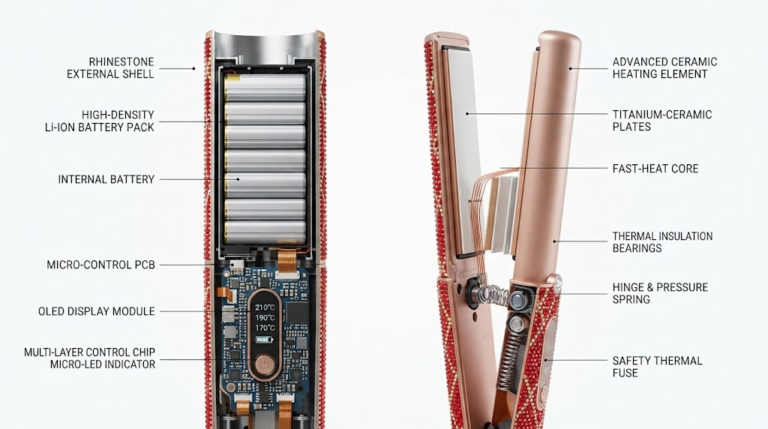
- Full electrical circuit diagrams and PCB layouts.
- Bill of Materials (BOM) identifying all safety-critical components.
- Reports from IEC-accredited testing laboratories.
- User manual copies in the local languages of all target markets.
- Risk assessment documentation for thermal and electrical hazards.
Frequently Asked Questions
How much does hair straightener certification cost?
For a standard model, combined CE, FCC, and RoHS testing typically ranges from $5,000 to $12,000. Adding specialized marks like PSE Diamond or UL can increase this significantly due to factory audit fees.
What are Amazon’s compliance requirements for 2026?
Amazon now requires proactive submission of UL 859 or IEC 60335-2-23 test reports before a listing can go live. Failure to provide these results in immediate “Safety Suppression” of the ASIN.
Start Your Global Compliance Audit
Ready for Global Market Entry?
Don’t let regulatory hurdles stall your brand’s growth. Follow our 3-step path to certified success:
- Discovery: Submit your product specs for a gap analysis.
- Testing: Conduct pre-compliance checks in our partner labs.
- Certification: Receive your full TCF and global marks.