MCH vs PTC: Best Heating Tech for Cordless Flat Irons
MCH vs PTC: The Evolution of Cordless Hair Straightener Tech
The global demand for high-performance styling on the go has forced a massive shift in heating element engineering. In the cordless hair straightener market, the choice between MCH (Metal Ceramic Heater) and PTC (Positive Temperature Coefficient) determines whether a product is a professional tool or a low-tier consumer novelty.
At Light Power Tech, our 2026 data shows that B2B buyers are moving away from traditional PTC due to its inherent limitations in low-voltage environments. While PTC served the corded market for decades, the Thermal Efficiency Gap in cordless tools has made MCH the only viable solution for brands targeting the premium segment.
The 45-Second Benchmark: Thermal Performance at 7.4V
MCH technology outperforms PTC in cordless applications because it operates as a pure resistive load with high power density. In our laboratory tests, under a standard 7.4V dual-cell power supply, MCH reaches a stable 200°C in 20 seconds. In contrast, traditional PTC elements require up to 90 seconds to reach the same threshold.
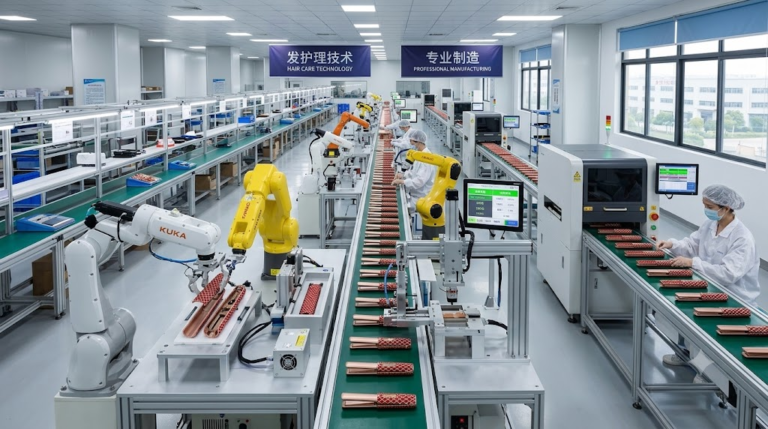
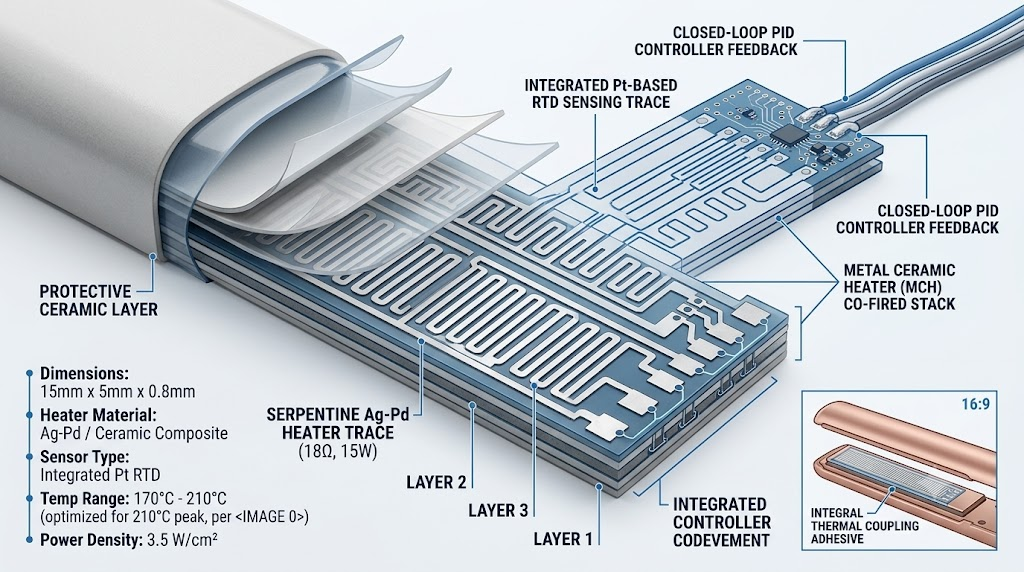
For professional users, those 45 seconds are the difference between a seamless styling experience and a frustrating wait. This speed is achieved through advanced B2B Manufacturing Solutions that integrate the tungsten or molybdenum manganese heating circuit directly into the ceramic alumina plate.
“The physics of PTC rely on a resistance increase as temperature rises, which naturally throttles power just when the tool needs it most. MCH doesn’t have this ‘bottleneck,’ allowing for a linear, rapid climb to styling temperatures.” — Dr. Chen, Senior Thermal Dynamics Engineer at Light Power Tech.
The Precision-Pulse Protocol: PID Intelligent Temperature Control
Speed is useless without stability. We define our proprietary Precision-Pulse Protocol as the integration of MCH hardware with a high-frequency PID (Proportional-Integral-Derivative) algorithm. This system detects plate temperature 100 times per second.
When the straightener touches damp hair, the temperature drops instantly. A standard PTC element is slow to react. Our Precision-Pulse system senses the drop and pulses the 4800mAh battery to compensate immediately. This ensures temperature uniformity within ±1°C, preventing the heat damage caused by the “temperature seesaw” effect common in cheaper alternatives.
Battery Life and Power Management for Professional Use
MCH is significantly more energy-efficient than PTC in the long run. By reaching the target temperature faster, the device spends less time in the high-draw “warm-up” phase. Our latest Portable Power Management systems leverage this efficiency to provide 45 minutes of continuous full-load work at 200°C.
- Dual-Cell Architecture: 4800mAh capacity optimized for 7.4V discharge.
- 65W Type-C Fast Charging: Goes from 0% to 100% in just 1.2 hours.
- Durability: MCH elements sustain over 3,000 hours of use without oxidation, outlasting PI films and PTC components.
MCH vs PTC vs PI Heating Film: A Comparative Analysis
B2B procurement teams must weigh performance against cost and weight. Below is a 2026 technical comparison based on our internal manufacturing standards.
| Feature | MCH (Ceramic) | PTC (Traditional) | PI Film (Polyimide) |
|---|---|---|---|
| Heat-up (to 200°C) | 45 Seconds | 90-120 Seconds | 60-80 Seconds |
| Thermal Stability | Excellent (PID) | Moderate | Low |
| Energy Efficiency | High | Low | Moderate |
| Durability (Cycles) | 5,000+ | 2,000 | 1,000 (Degrades) |
While PI heating films are often used in ultra-lightweight travel minis, they lack the “thermal mass” required for thick or coarse hair. MCH remains the superior choice for professional-grade cordless flat irons.
Our Laboratory Testing Standards and Methodology
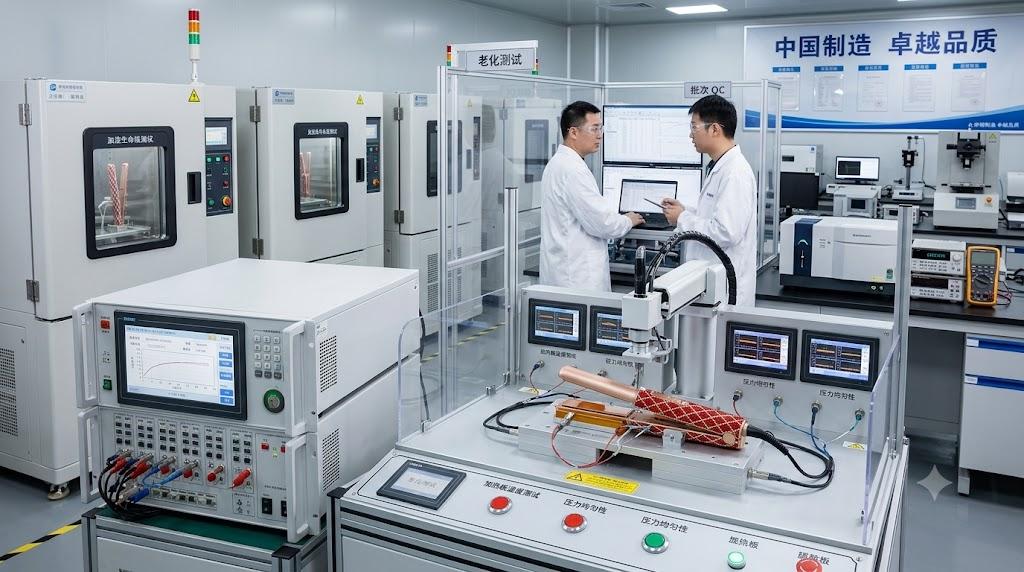
Transparency is the foundation of our B2B partnerships. All data presented by Light Power Tech is derived from our Standardized Environmental Testing (SET). We conduct tests in a controlled 25°C laboratory environment with zero airflow to eliminate external variables.
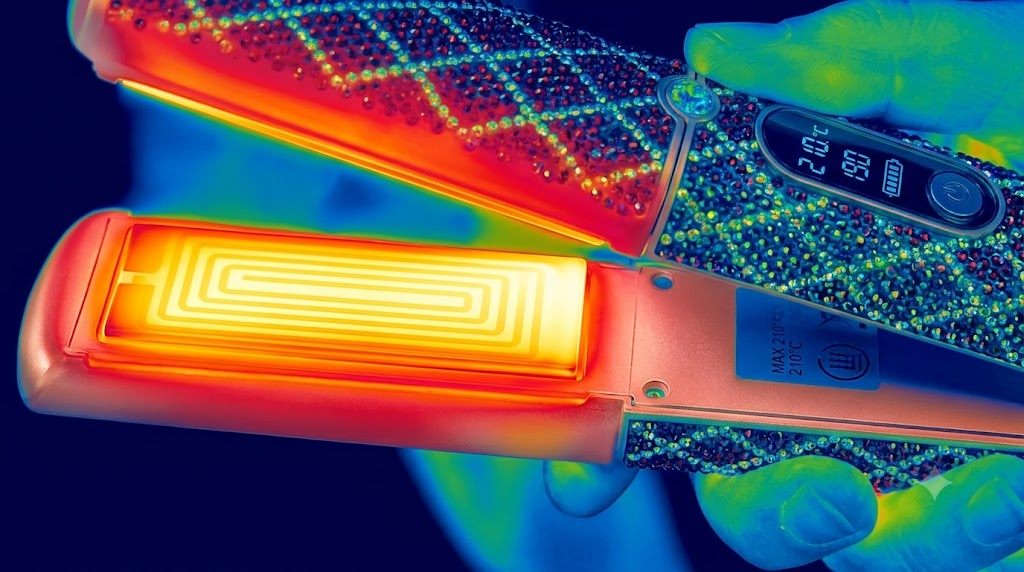
Using Infrared Thermal Imaging (FLIR Systems), we map the heat distribution across the entire ceramic plate. Our 2026 MCH modules show less than a 3°C variance from the center to the edge. This level of precision is verified by third-party Intertek and SGS certifications for CE and RoHS compliance.
Request an Engineering Sample for Internal Testing
We understand that enterprise-level procurement requires hands-on verification. If your brand is looking to upgrade its cordless styling line with MCH technology and PID algorithms, we invite you to request an engineering sample.
Validate Our 20-Second Heat-Up Patent
Request your technical sample package today, including a full thermal imaging report and battery cycle breakdown.
Step 1: Select your housing color and branding requirements.
Step 2: Schedule a brief call with our thermal dynamics team.
Step 3: Receive your sample via express logistics (3-5 business days).
Frequently Asked Questions
Is MCH safe for international travel?
Yes. Our MCH-based cordless straighteners include a physical “Flight Mode” battery disconnect switch, making them fully compliant with FAA and IATA regulations for lithium-ion devices in carry-on luggage.
Does PTC’s self-regulating nature make it safer than MCH?
While PTC is inherently self-limiting, our MCH systems use triple-redundant safety layers: the PID algorithm, a hardware thermal fuse, and NTC (Negative Temperature Coefficient) thermistors to ensure absolute safety.
How does MCH affect long-term battery health?
Because MCH is more efficient at maintaining heat, the battery undergoes fewer high-stress discharge cycles during a styling session. This preserves the 300-cycle durability standard we guarantee for all Light Power Tech products.